Before Dawn in Appalachian Hills
The alarm clock never got the chance to ring. Sarah Beth McKenzie was already awake at 4:30 AM, listening to her father's pickup truck rumble to life in the driveway below. By the time his taillights disappeared down the mountain road toward the coal mine, she was pulling on boots that never quite dried from the day before.
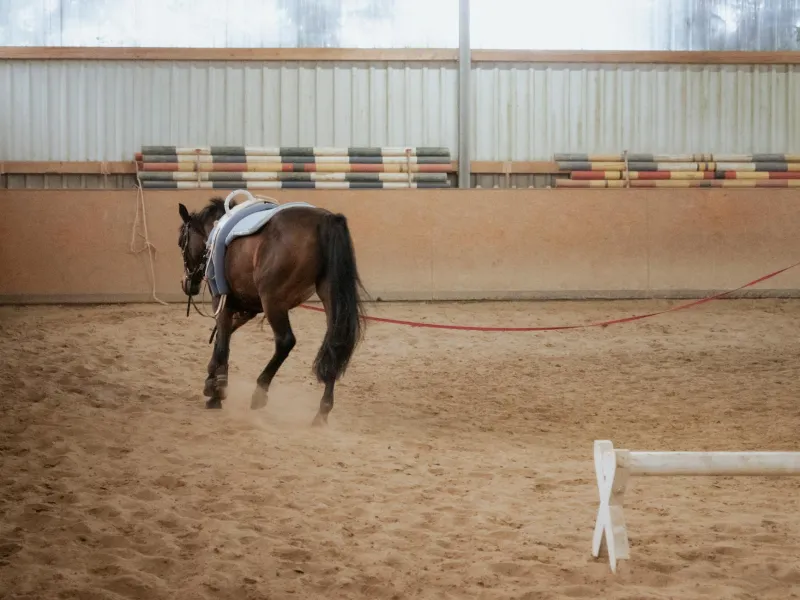
McKenzie's morning walk took her two miles down a winding gravel road to Millfield Farm, where she'd spend the next twelve hours doing everything wealthy horse owners paid other people to do. At fourteen, she was the youngest stable hand on the payroll, earning $4 an hour to muck stalls, haul feed, and exercise horses worth more than her family's trailer.
 Photo: Millfield Farm, via images.squarespace-cdn.com
The irony wasn't lost on her: she was surrounded by million-dollar animals she could never afford, working for families who spent more on a single horse's monthly care than her father earned in the mines.
The Education Money Couldn't Buy
While other teenagers were sleeping in on weekends, McKenzie was learning an entirely different curriculum. She memorized the subtle differences between a horse favoring its left front hoof versus compensating for a sore back. She could read an animal's mood from the set of its ears before she reached the stall door.
"Rich kids would show up for their one-hour lessons and think they understood horses," McKenzie recalls. "I was spending sixty hours a week with these animals. I knew which mare got cranky before storms, which gelding needed an extra ten minutes to warm up, which horses performed better with soft voices versus firm commands."
Her job description officially covered basic stable maintenance, but McKenzie had quietly expanded her responsibilities. She'd arrive early to hand-walk horses recovering from injuries, staying late to ice tendons and wrap legs. The veterinarian began asking for her observations during routine visits, recognizing that she often spotted problems before expensive diagnostic equipment did.
The Breakthrough Ride
McKenzie's first real opportunity came through catastrophe. During a regional competition in her third year at Millfield, the farm's star rider fell ill with food poisoning hours before a major event. The owner, Mrs. Eleanor Whitfield, faced a difficult choice: forfeit the entry fees and disappoint sponsors, or find a substitute rider for her prized horse, Sovereign's Gold.
McKenzie had been exercising Sovereign's Gold for two years, but always in private training sessions. She knew the horse's quirks better than anyone: how he needed to approach jumps from a slight left angle, how he responded to leg pressure differently than rein commands, how he performed best when riders stayed quiet and let him find his own rhythm.
"Mrs. Whitfield looked at me like I'd suggested flying to the moon," McKenzie remembers. "A stable hand competing against riders who'd spent $50,000 a year on training? But she was desperate, and I knew that horse better than his actual rider did."
The competition was a disaster—for everyone except McKenzie. While experienced riders fought their mounts through technical courses, she and Sovereign's Gold moved like they'd been partners for years. They finished third in a field of twenty-seven, beating riders who'd been training since childhood.
The Unconventional Apprenticeship
Word spread quickly through Kentucky's tight-knit equestrian community. A stable worker had outperformed riders with decades of formal training, using nothing but intuition and an encyclopedic knowledge of her mount's preferences.
Whitfield made McKenzie an offer: continue working at the stable, but with time carved out for formal competition training. The arrangement was unprecedented—most riders at this level either came from wealthy families or received full sponsorships. McKenzie would be the first competitor to literally work her way into the sport.
The training schedule was brutal. McKenzie would complete her stable duties before sunrise, train with Whitfield's horses until afternoon, then return to evening chores. She was simultaneously the barn's hardest worker and its most promising athlete, a combination that confused everyone except the horses themselves.
Breaking Through Class Barriers
Equestrian sports have always been defined by exclusivity. Horses, training facilities, and competition costs create natural barriers that keep working-class athletes on the sidelines. McKenzie's presence at competitions was jarring—she'd arrive in borrowed trucks, wearing secondhand riding gear, competing against athletes whose horses traveled in custom trailers worth more than houses.
But her results were undeniable. Within two years, she was winning regional competitions regularly. Within four years, she'd earned a spot on the U.S. Equestrian Team's development roster. Her secret wasn't superior training or expensive equipment—it was an intimate understanding of horses that could only come from years of unglamorous daily care.
"Most riders learn to communicate with horses during structured lessons," explains Dr. Rebecca Martinez, an equine behaviorist who studied McKenzie's methods. "Sarah Beth learned to communicate with them during the mundane moments—while cleaning stalls, during feeding time, while treating minor injuries. She understood these animals as individuals, not just athletic equipment."
Olympic Dreams on a Working Budget
McKenzie's path to the 2008 Beijing Olympics was unlike any teammate's journey. While other riders trained at elite facilities with multiple horses, she continued working at Millfield Farm, saving every penny for competition expenses. Her Olympic horse, Midnight's Promise, was a seven-year-old thoroughbred she'd discovered at a rescue auction—an animal others had written off as too spirited for competitive riding.
 Photo: Beijing Olympics, via thumbs.dreamstime.com
The partnership made perfect sense to McKenzie. She'd built her career on understanding misunderstood horses, on finding potential that others missed. Midnight's Promise had been labeled "difficult" by previous owners, but McKenzie recognized something different: a horse with strong opinions who needed a rider willing to listen rather than dominate.
Their Olympic performance captured everything that made McKenzie's story unique. While other combinations relied on technical precision and expensive training, she and Midnight's Promise competed with an almost conversational quality—a horse and rider who'd learned to trust each other through years of patient, unglamorous work.
The Legacy Beyond Competition
McKenzie retired from international competition in 2012, but her influence on equestrian sports continues growing. She established the Working Riders Foundation, which provides training opportunities for young athletes from non-traditional backgrounds. The program operates on a simple principle: talent doesn't require a trust fund.
Her training methods, developed through necessity rather than formal education, have been adopted by riders across the country. The "McKenzie Method" emphasizes daily interaction with horses outside of structured training—exactly the kind of relationship she'd built while working as a stable hand.
The View From the Stable
Today, McKenzie operates her own training facility in central Kentucky, where working students can earn riding time through stable duties. The program attracts athletes from across the country, but the core philosophy remains unchanged: the best riders understand horses as partners, not tools.
"People always ask if I resent starting from the bottom," McKenzie says, watching a teenage student lead a horse in from morning turnout. "But starting from the bottom taught me everything I needed to know. When you muck a horse's stall every day for three years, you learn things about that animal that no amount of money can buy."
Her story challenges equestrian sports' traditional narrative of privilege and exclusivity. In a sport where success typically requires generational wealth, McKenzie proved that proximity to dreams—even without ownership—can become its own kind of advantage.
The horses, it turns out, never cared about her bank account. They only cared that she showed up every morning, ready to listen.