The School of Hard Knocks
The carnival rolled into Bakersfield on a dusty Thursday in 1952, bringing with it the usual collection of games, rides, and questionable entertainment that small-town America couldn't resist. But tucked between the ring toss and the house of mirrors sat something different: a boxing tent where local tough guys could test themselves against "Battling Bill" Morrison, a washed-up heavyweight who'd once gone three rounds with Joe Louis.
Tommy McGrath was seventeen, rail-thin, and desperate for the five-dollar prize that went to anyone who could last three minutes with Morrison. What he lacked in training, he made up for in pure necessity – his family needed that money more than he needed his dignity.
Three minutes later, Tommy was flat on his back, seeing stars and tasting blood. But something about the experience hooked him deeper than any knockout punch.
Life Under the Big Top
Most fighters learn their craft in proper gyms, with regulation rings, speed bags, and trainers who've studied the sweet science for decades. Tommy McGrath learned his in a canvas tent that leaked when it rained, fighting anyone brave enough or drunk enough to step through the ropes.
The carnival circuit was boxing's wild west – no athletic commissions, no medical oversight, just raw competition fueled by pride and desperation. Fighters came from everywhere and nowhere: farm kids looking for adventure, factory workers blowing off steam, ex-soldiers trying to recapture something they'd lost in Korea.
"Every night was different," Tommy would later recall. "You might face a college wrestler who thought he could box, or some old-timer who'd been doing this since the Depression. You learned to adapt fast, or you learned to hit the canvas even faster."
The Unconventional Education
While legitimate fighters trained with heavy bags and sparring partners, Tommy's education came from variety. One night he'd face a southpaw who'd never heard of orthodox stance. The next, he'd square off against a brawler who fought like he was clearing out a bar. Each opponent taught him something no textbook could: how to think on his feet when everything went wrong.
The carnival taught him other lessons too. How to fight through exhaustion when you've already gone two rounds and the crowd wants more. How to read a crowd and give them just enough show to keep them happy. How to take punishment and keep coming forward, because backing down meant going hungry.
Most importantly, it taught him that fighting wasn't about perfect technique or ideal conditions. It was about heart, adaptability, and the willingness to get back up when everything in your body screamed to stay down.
From Sawdust to Spotlight
By 1955, Tommy had spent three years traveling with various carnivals across the Southwest, fighting in towns so small they barely appeared on maps. He'd won most of his fights, lost a few that taught him more than victories ever could, and earned enough money to help his family weather the worst of their financial troubles.
That's when Mickey Torrino found him.
Torrino was a small-time promoter who'd heard stories about a kid who'd been tearing up the carnival circuit. He offered Tommy something the carnivals never could: legitimate fights with real prospects, proper training facilities, and a shot at actual titles.
The transition wasn't easy. Tommy's unorthodox style, forged in carnival tents against unpredictable opponents, didn't translate immediately to regulated boxing. His footwork was wild, his combinations unconventional, his defense built more on instinct than instruction.
But what he lacked in polish, he made up for in something his gym-trained opponents couldn't replicate: an absolute refusal to quit.
The Title Fight Nobody Expected
On November 12, 1956, Tommy McGrath stepped into the ring at the Oakland Auditorium to face Danny "The Destroyer" Delacroix for the California State Welterweight Championship. On paper, it looked like a mismatch. Delacroix was 23-1, trained by former champions, and backed by serious money. Tommy was 19-7-2, trained by a carnival veteran named "Professor" Pete Williams, and supported by a small contingent of farmers who'd driven up from the Central Valley.
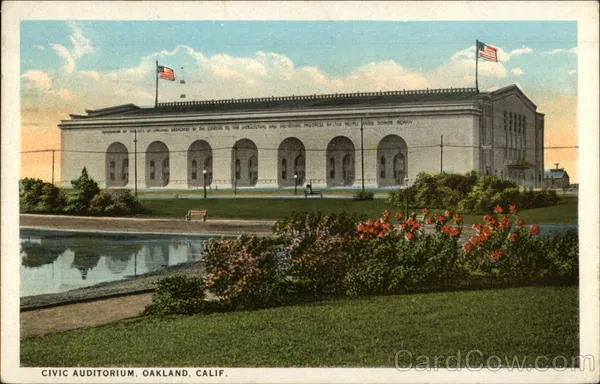 Photo: Oakland Auditorium, via www.cardcow.com
The smart money was on Delacroix by knockout in the early rounds.
What happened instead was a masterclass in the difference between training for boxing and training for fighting. Delacroix fought like he'd been taught – textbook combinations, proper stance, measured aggression. Tommy fought like he'd learned – adapting to whatever came at him, absorbing punishment that would have dropped lesser men, and pressing forward with a relentlessness that carnival crowds had taught him to value above all else.
By the eighth round, Delacroix's perfect technique was crumbling under the pressure of facing someone who simply wouldn't be defeated. Tommy won by TKO in the tenth, claiming a title that most experts said he had no business even competing for.
The Carnival Champion
Tommy McGrath defended his California State title three times before retiring in 1959 to open a gym in Modesto. But his real legacy wasn't the championship belt that hung in his office – it was the proof that boxing excellence could emerge from the most unlikely places.
The carnival circuit that shaped him has long since disappeared, replaced by youth programs, amateur leagues, and professional development systems that produce more polished fighters than Tommy's era ever could. But something was lost in that transition: the understanding that true toughness comes not from perfect conditions, but from learning to excel despite them.
"I wouldn't trade those carnival years for all the proper training in the world," Tommy said shortly before his death in 2003. "They taught me that fighting isn't about having the best coach or the fanciest gym. It's about what you do when everything's against you and quitting seems like the smart choice."
In an era when athletic success increasingly requires early specialization, expensive coaching, and access to elite facilities, Tommy McGrath's journey from carnival tent to championship ring serves as a reminder that sometimes the longest roads produce the most durable champions.