Equations Over Easy: The Diner Cook Who Launched the Space Race
The University That Never Existed
The sign outside read "Washington's All-Day Diner," but locals in Shreveport, Louisiana knew it by a different name: "The Professor's Place." Between serving up grits and coffee to oil field workers, Samuel Washington was quietly running the most important classroom that never officially existed.
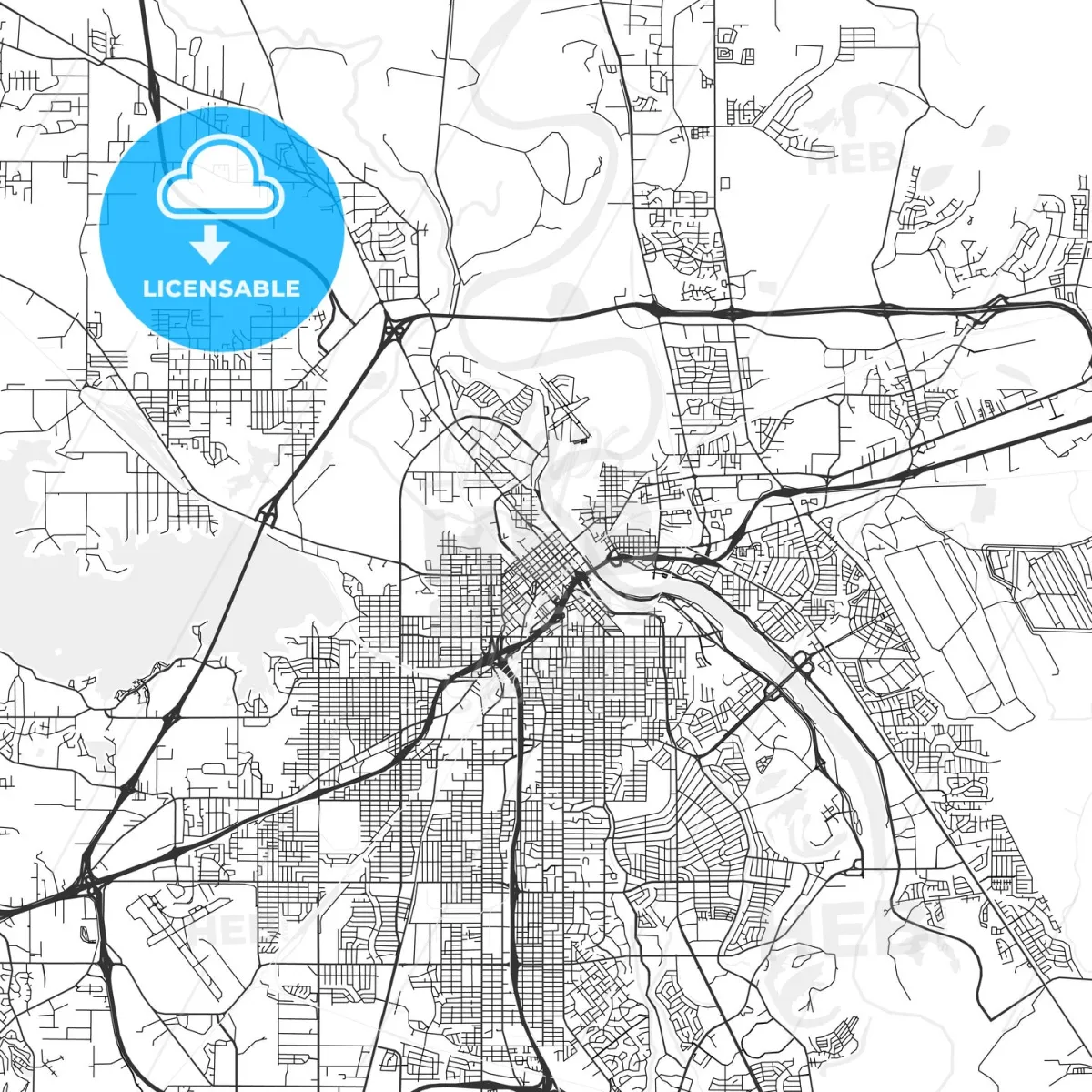 Photo: Shreveport, Louisiana, via hebstreits.com
It was 1954, and while the Supreme Court had just ruled on Brown v. Board of Education, the reality for brilliant Black students in the Deep South remained unchanged. Universities were still segregated, and opportunities for advanced study in mathematics and science were virtually nonexistent.
Samuel Washington decided to create his own.
The Cook Who Calculated
Washington had never attended college himself. The son of sharecroppers, he'd learned to read from discarded newspapers and developed his mathematical abilities by calculating crop yields and managing farm accounts. When he moved to Shreveport in 1948 and opened his diner, he brought with him an insatiable curiosity about how things worked.
His real education came from the Shreveport Public Library, where he spent every evening after closing the diner. The librarians grew accustomed to finding him asleep over physics textbooks in the morning, having studied until the building closed around him.
"Mr. Sam could explain calculus better than most college professors," remembers Dorothy Jenkins, now 89, who worked as a waitress at the diner. "He'd be flipping eggs with one hand and solving equations on napkins with the other."
The Back Booth Academy
Word spread quietly through Shreveport's Black community about the cook who could teach advanced mathematics. Parents began bringing their brightest children to Washington's diner, not for the food, but for what happened in the back booth after the lunch rush ended.
Washington's classroom had no formal curriculum, no grades, and certainly no accreditation. What it had was something more valuable: a teacher who understood that brilliance could emerge from anywhere, and who refused to let segregation limit his students' potential.
"He made us see that mathematics wasn't just numbers on a page," recalls Dr. Robert Turner, now 84, one of Washington's first students. "It was the language that described everything around us — from the arc of a baseball to the orbit of planets."
Three Students, Three Destinies
Among Washington's pupils were three young men whose lives would intersect with America's greatest technological achievement. Their stories demonstrate how education, determination, and an unlikely mentor could overcome seemingly insurmountable barriers.
Robert Turner arrived at the diner in 1955, a 15-year-old whose teachers had exhausted their ability to challenge him. Washington recognized Turner's gift for spatial reasoning and spent two years preparing him for the physics and engineering concepts he'd need for college.
When Turner finally gained admission to Prairie View A&M University in Texas, he was so far ahead of his classmates that professors began using him as a teaching assistant. After graduation, he joined NASA's Marshall Space Flight Center in Huntsville, Alabama, where he helped calculate trajectories for the Apollo missions.
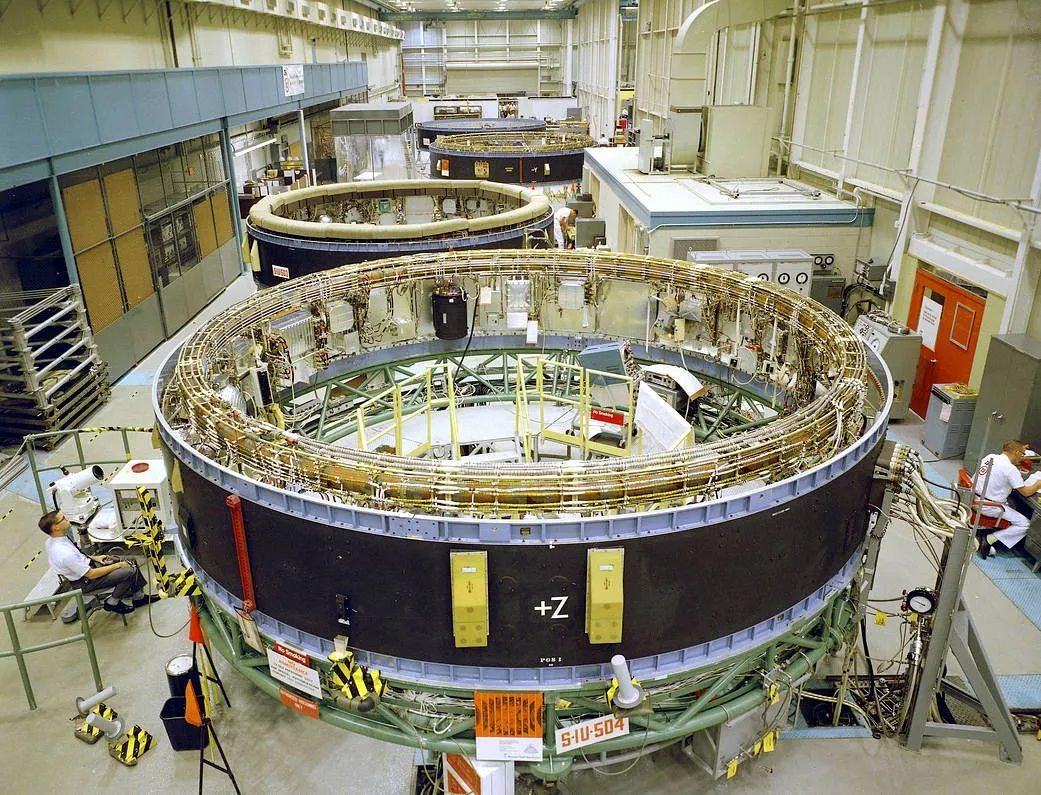 Photo: NASA's Marshall Space Flight Center, via cdn.mos.cms.futurecdn.net
James Mitchell was 17 when his mother brought him to meet "the Professor" in 1957. Mitchell had been denied admission to Louisiana Tech's engineering program despite scoring higher on entrance exams than most accepted students. Washington spent three years tutoring him in advanced mathematics and physics, preparing him for the challenges ahead.
Mitchell eventually earned his engineering degree from Tuskegee Institute and joined NASA's Jet Propulsion Laboratory in California. His work on guidance systems helped ensure that Apollo 11 could navigate the quarter-million miles between Earth and the moon with pinpoint accuracy.
David Washington (no relation to Samuel) was perhaps the most unlikely success story. The son of a single mother who cleaned houses, he showed up at the diner in 1959 because his mother couldn't afford after-school care. Samuel Washington put him to work busing tables and discovered the boy had an intuitive understanding of complex mathematical relationships.
"David could look at a problem and see solutions that took the rest of us hours to calculate," Turner remembers. "Mr. Sam called it 'mathematical instinct.'"
David Washington would eventually earn a doctorate in aerospace engineering from MIT and become one of the lead designers of the Saturn V rocket's guidance computer — the system that made human spaceflight possible.
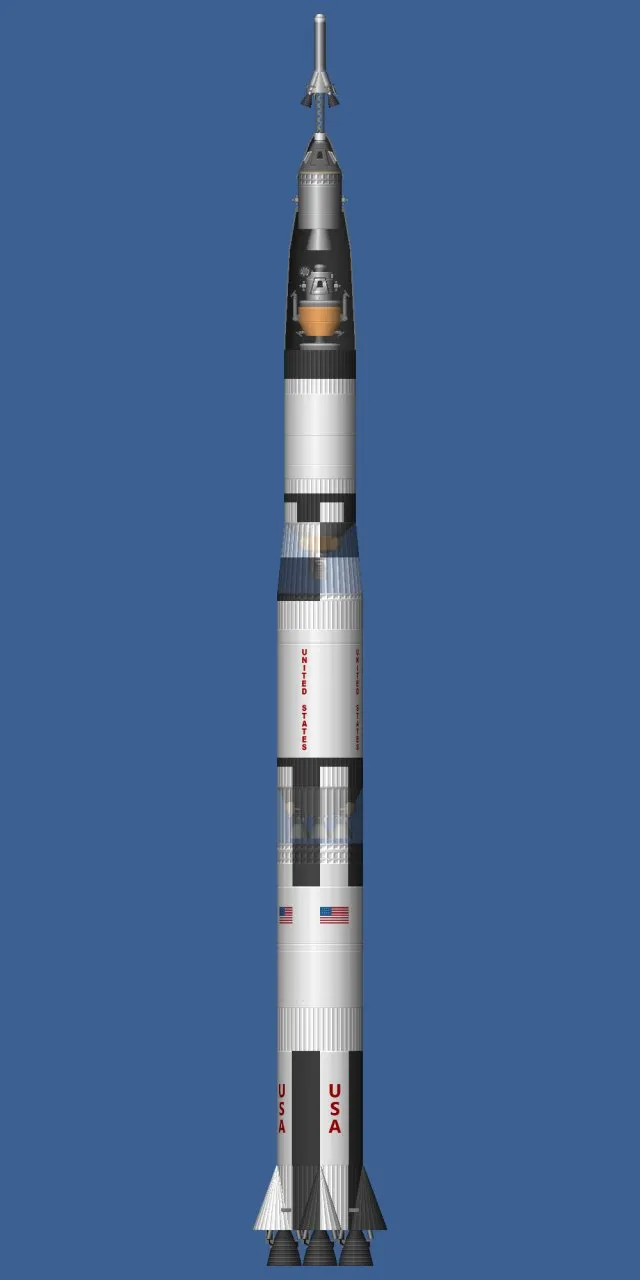 Photo: Saturn V rocket, via img.sfsuniverse.com
The Hidden Network
Washington's influence extended far beyond these three students. By the early 1960s, he had quietly mentored more than forty young people, many of whom went on to careers in science, engineering, and mathematics. They formed an informal network, supporting each other through college and early careers, always remembering the diner where it all began.
"We called ourselves 'Sam's Kids,'" says Dr. Turner. "Whenever one of us faced a challenge, we'd ask: 'What would the Professor do?'"
Washington never charged for his tutoring. Instead, he asked his students to promise that they would help others the way he had helped them. It was a debt most of them spent their entire careers repaying.
The Price of Progress
Washington's informal school operated in constant danger. In 1960s Louisiana, a Black man teaching advanced mathematics to young people was viewed with suspicion by some in the white community. There were threats, and more than once, local authorities questioned Washington about his "activities."
He persisted anyway, believing that education was both a right and a responsibility that couldn't be legislated away.
"Mr. Sam used to say that ignorance was the only thing that could truly hold us back," Mitchell recalls. "He'd seen too much talent wasted because people didn't get the chances they deserved."
The Legacy of Learning
Samuel Washington closed his diner in 1972, at age 67, and returned to the family farm in rural Louisiana. He died in 1989, having lived long enough to see his students' contributions to the space program recognized and celebrated.
At his funeral, three NASA engineers served as pallbearers. Turner, Mitchell, and David Washington had all achieved remarkable careers, but they never forgot the man who made it possible.
"People talk about the space race like it was just about rockets and computers," says Mitchell. "But it was really about education and opportunity. Mr. Sam understood that long before anyone else did."
Lessons From the Back Booth
Today, all three men are retired, but their influence continues through the students they mentored and the programs they established to support underrepresented students in STEM fields. They've endowed scholarships at historically Black colleges and universities, always specifying that recipients should be students who show promise despite facing significant obstacles.
The Washington's All-Day Diner building still stands in Shreveport, though it now houses a cell phone store. There's no historical marker, no plaque commemorating what happened there. But the impact of those back booth lessons reverberates through American history.
Samuel Washington proved that transformative education doesn't require prestigious institutions or massive funding. Sometimes all it takes is someone who believes in potential, a willingness to share knowledge, and the courage to teach when the world says you shouldn't.
In an era when we debate how to improve American education and increase diversity in STEM fields, Washington's story offers a powerful reminder: the most important classrooms are often the ones that exist outside official recognition, where passionate teachers meet eager students and change the world one equation at a time.