What If We've Been Getting Youth Sports Completely Wrong?
What If We've Been Getting Youth Sports Completely Wrong?
Walk into any competitive figure skating rink in America on a Tuesday morning and you'll find the same scene: six-year-olds in rhinestones, parents clutching travel coffee mugs, coaches with the quiet intensity of military strategists. The message in the air is unspoken but unmistakable — if your kid isn't on the ice by now, they're already behind.
The sports world has spent decades building this logic into its foundation. Early specialization. Deliberate practice from childhood. The 10,000-hour rule. We've turned athletic development into something that looks a lot like a race where the starting gun fires in kindergarten.
But a handful of extraordinary athletes have been quietly blowing that entire framework apart.
The Ice Doesn't Care How Old You Are
Figure skating is perhaps the sport most associated with early entry. The physical demands — flexibility, body awareness, the fearlessness required to throw yourself into jumps — are widely assumed to belong to the young. Elite skaters typically begin between ages three and six. Olympic champions often have a decade of serious training behind them before they hit their teens.
Which makes the story of Sharyn Resh all the more remarkable.
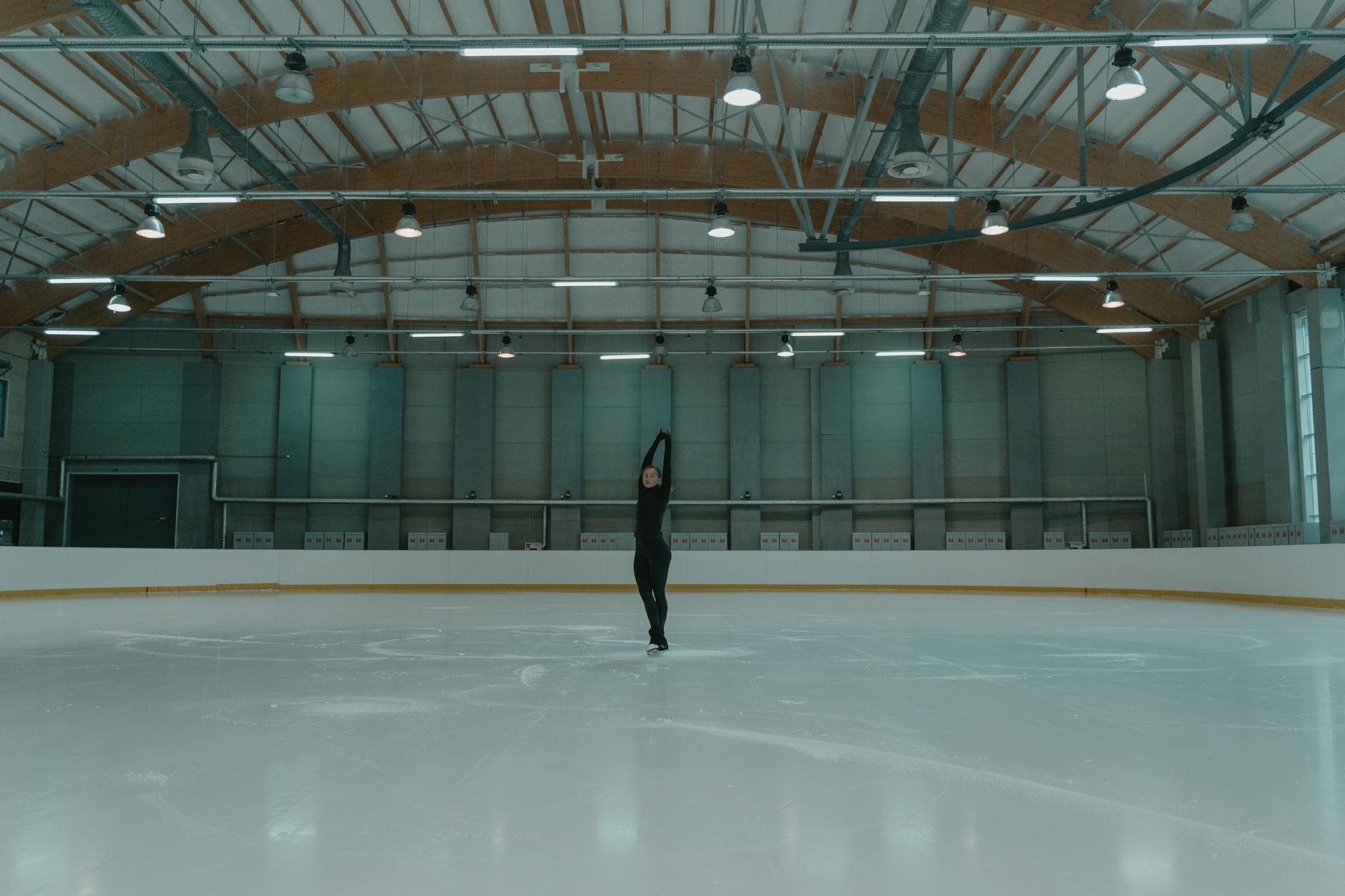
Resh didn't lace up a pair of skates with any seriousness until she was in her late twenties. A recreational skater who fell in love with the sport as an adult, she eventually competed at the national level in adult figure skating divisions, earning recognition in a community that increasingly celebrates athletes who find their sport on an unconventional timeline. While her path didn't lead to an Olympic podium, her journey contributed to a growing conversation: the system we've built around early specialization may be leaving enormous talent on the table.
The more striking cases — athletes who genuinely reached elite international competition after discovering their sport as adults — tend to cluster in disciplines where raw athleticism can be developed quickly, or where mental maturity compensates for years of technical training. Skeleton. Bobsled. Biathlon. And yes, in some cases, figure skating.
The American Obsession With the Prodigy
The United States has a complicated relationship with athletic development. On one hand, there's a deep cultural love for the underdog, the late bloomer, the person who defied expectations. On the other hand, the infrastructure of American youth sports — the travel teams, the elite academies, the year-round specialization programs — is built almost entirely around identifying and developing talent as early as possible.
The result is a system that's extraordinarily good at producing certain kinds of athletes, and quietly terrible at recognizing others.
Sports scientists have started pushing back on the early-specialization model with real data. Research from institutions including the American Academy of Pediatrics has raised concerns about the physical and psychological costs of early single-sport focus — burnout, overuse injuries, and the loss of athletes who might have thrived if they'd been given time to develop across multiple disciplines before committing to one.
More provocatively, some researchers argue that the early-specialization pipeline doesn't just harm young athletes — it actively filters out late developers who might have become exceptional given a different entry point.
How many potential Olympians never got the chance to start?
The Ones Who Found a Way Anyway
The athletes who beat this system tend to share a few qualities that don't show up in highlight reels.
First, they're relentless self-advocates. The infrastructure of elite sport isn't designed for adults who show up late. There are no recruitment pipelines for a 28-year-old who just discovered they have elite athletic potential. Coaches are often skeptical. Funding is scarce. The social dynamics of training environments built around teenagers can be genuinely alienating. Late-entry athletes have to want it badly enough to navigate all of that without institutional support.
Second, they tend to be exceptional learners. The mental maturity that comes with age turns out to be a genuine competitive advantage in some disciplines. Adult learners bring focus, emotional regulation, and a capacity for deliberate self-analysis that many young athletes simply don't have yet. A 30-year-old who commits to mastering a skill often progresses faster than a teenager with equivalent raw ability, precisely because they know how to learn.
Third — and this is the part that tends to get lost in inspirational narratives — they're almost always responding to something specific. A chance encounter with a sport. A friend's invitation. A life transition that suddenly opened up time and attention. The late-blooming athlete isn't usually someone who woke up one day and decided to chase a dream. They're someone who stumbled into an opportunity and recognized it for what it was.
Rethinking the Timeline
The 2022 Winter Olympics in Beijing offered a vivid illustration of athletic diversity in age and origin. The American team included athletes who had taken wildly different paths to the same stage — some who had been groomed for elite competition since childhood, and others whose trajectories looked nothing like the standard model.
The broader Olympic movement has seen a quiet expansion of late-entry athletes across multiple disciplines over the past two decades. Skeleton, which wasn't reintroduced to the Winter Games until 2002, has produced multiple elite competitors who came to the sport in their mid-to-late twenties. The U.S. military's World Class Athlete Program has helped servicemembers discover Olympic-level talent they had no idea they possessed, often well into their twenties.
What these cases suggest isn't that early training doesn't matter — it clearly does, in most disciplines. What they suggest is that the window for elite development is wider than the current system assumes, and that the infrastructure we've built is optimized for a narrow band of the actual talent population.
The Question Nobody's Asking Loudly Enough
Every conversation about late-blooming athletes eventually circles back to the same uncomfortable implication: the stories we celebrate as exceptions might actually be pointing at a systemic failure.
The athlete who learned to skate at 31 and competed at the national level isn't just an inspiring individual. She's evidence that the pipeline has gaps. The former servicemember who discovered skeleton at 27 and made a World Cup podium isn't just a feel-good story. He's a data point about untapped potential.
America loves the underdog. What it hasn't fully reckoned with is the possibility that the system creating the underdogs might be the problem.
For now, the late bloomers keep showing up. They find the rink, or the track, or the training facility, and they do the work that the system told them was pointless. Some of them make it to stages nobody thought they'd ever reach.
All of them are asking the same question, whether they know it or not: what took you so long to let us try?