The Notebook Revolution: How a Kentucky Schoolteacher's Scribbles Became Olympic Gold

The Classroom Laboratory
Margaret Hensley taught in a one-room schoolhouse in Breathitt County, Kentucky, where the nearest doctor was twenty miles away and the closest thing to athletic training was common sense passed down through generations of mountain folk.
 Photo: Breathitt County, Kentucky, via uscountymaps.com
 Photo: Margaret Hensley, via cache.legacy.net
It was 1923, and her students walked miles to school, worked family farms before dawn, and somehow found energy to play games during recess that would exhaust modern athletes. Margaret started keeping notes—not because she planned to revolutionize sports science, but because she was curious about why some children recovered from exertion faster than others.
Those margin scribbles in her lesson plan book would eventually influence training methods used by Olympic champions eighty years later.
Patterns in the Playground
Margaret's students didn't have access to organized sports, so they created their own: rock-throwing contests that required precision and endurance, log-rolling competitions that demanded balance and core strength, and hill-running races that tested cardiovascular fitness at altitude.
What Margaret noticed was that the children who performed best weren't necessarily the strongest or fastest. They were the ones who understood their bodies' rhythms.
"Some children could run all day but needed longer rest between efforts," she wrote in her notebook. "Others recovered quickly but tired sooner. The key seemed to be matching the work to the child's natural patterns."
This observation—that individual recovery patterns matter more than universal training formulas—wouldn't be accepted by mainstream sports science until the 1980s.
The Mountain Method
Margaret began experimenting with what she called "natural conditioning." Instead of formal exercise routines, she incorporated movement into daily lessons. Students might practice arithmetic while doing squats, or recite poetry during walking meditation around the schoolyard.
"The children didn't realize they were training," she noted. "They were just learning and moving, the way humans are meant to do."
She also observed that students performed better when they alternated intense activities with complete rest, rather than maintaining moderate effort continuously. This insight predated interval training methodology by thirty years.
Most importantly, Margaret discovered that emotional state affected physical performance more than anyone realized. Students who felt supported and encouraged recovered faster from physical exertion than those who were criticized or pressured.
The Traveling Notebooks
Word of Margaret's unusual teaching methods spread through Kentucky's mountain communities. Parents noticed their children were stronger, healthier, and more confident. Other teachers started visiting Breathitt County to observe her classroom.
One visitor was James Morrison, a former college athlete who had become a high school coach in Lexington. He was struggling with his track team's conditioning program when he heard about a schoolteacher whose students could outrun and out-work teenagers twice their age.
"I expected to find some kind of rigorous training regimen," Morrison later wrote. "Instead, I found children playing games that happened to be perfectly designed for athletic development."
Morrison asked Margaret to share her observations. She handed him three composition books filled with handwritten notes about movement, recovery, nutrition, and what she called "the psychology of effort."
From Mountains to Medals
Morrison adapted Margaret's methods for his high school team. His runners began alternating high-intensity intervals with complete rest, focusing on individual recovery patterns rather than uniform training schedules. They ate simple, whole foods and practiced what Margaret called "purposeful rest"—mental techniques for accelerating physical recovery.
The results were immediate and dramatic. Morrison's track team won the state championship three consecutive years. College coaches started asking about his training methods.
Morrison shared Margaret's notebooks with other coaches, who adapted her principles for their own sports. By the 1940s, variations of her methods were being used by Olympic training programs, though few people knew the original source.
The Anonymous Revolution
"The notebook method," as it became known in coaching circles, emphasized several principles that Margaret had discovered through careful observation:
Individual Recovery Patterns: Athletes perform best when training aligns with their natural rhythms, not arbitrary schedules.
Integrated Movement: Physical conditioning works better when combined with mental activities rather than isolated as pure exercise.
Emotional Foundation: Psychological support accelerates physical adaptation and recovery.
Natural Intervals: The body responds better to alternating intensity with complete rest than to sustained moderate effort.
Whole Foods Nutrition: Simple, unprocessed foods provide better fuel for athletic performance than manufactured supplements.
These concepts seem obvious now, but they were revolutionary in an era when athletic training consisted mainly of running laps and lifting weights.
The Scientific Validation
By the 1960s, sports scientists were "discovering" principles that Margaret had documented forty years earlier. Research on periodization, heart rate variability, and sports psychology validated observations she had made by watching children play in a Kentucky schoolyard.
Dr. Ernst van Aaken, the German physician who developed modern interval training methods, unknowingly echoed Margaret's philosophy when he wrote: "The art of training lies in the ability to observe natural patterns and work with them rather than against them."
Similarly, Timothy Gallwey's influential book "The Inner Game of Tennis" popularized mental training techniques that Margaret had been using with her students since the 1920s.
Olympic Echoes
The 1972 Munich Olympics marked a turning point in athletic training. Eastern European countries dominated many events using methods that emphasized individual adaptation, integrated conditioning, and psychological preparation—all principles Margaret had developed in rural Kentucky fifty years earlier.
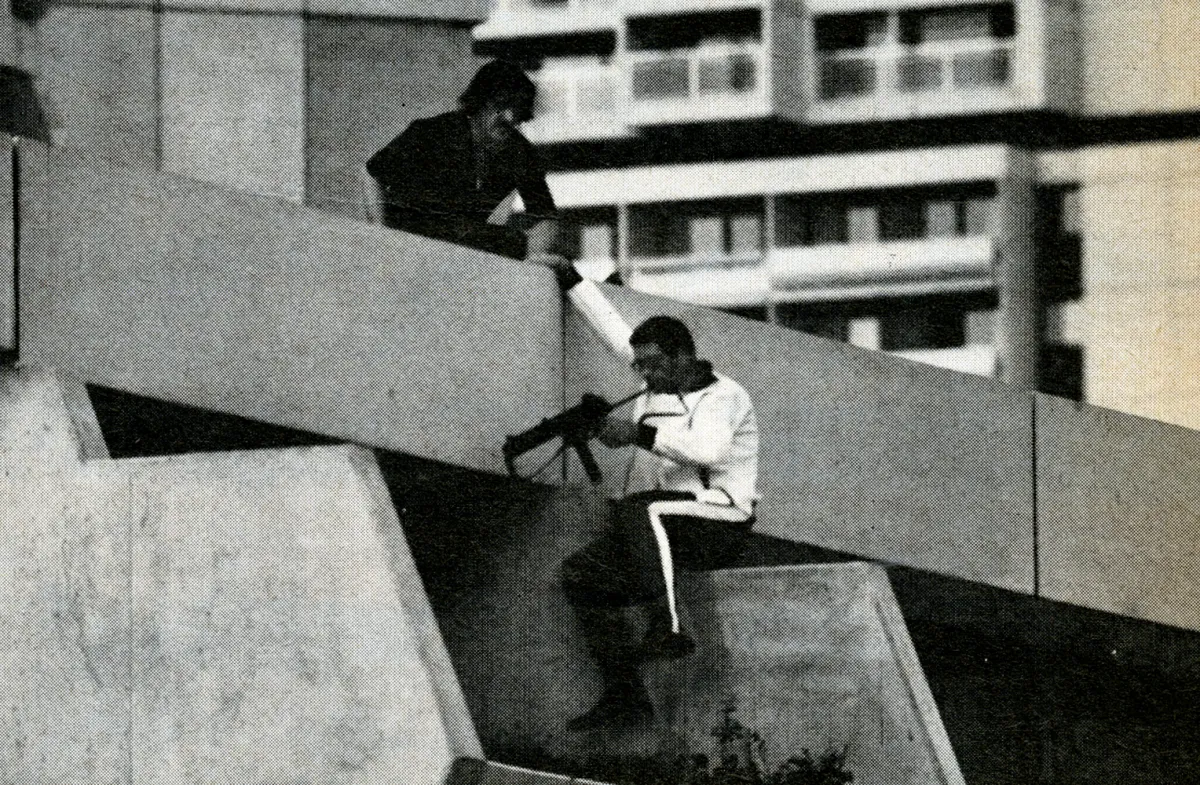 Photo: 1972 Munich Olympics, via api.time.com
American coaches scrambled to understand these "new" training philosophies. Many found their way back to coaching networks that could trace their methods to Morrison's adaptation of Margaret's notebooks.
"We thought we were learning revolutionary techniques from European sports scientists," recalled Olympic swimming coach Don Gambril. "Later, I realized we were rediscovering wisdom that had been hiding in plain sight in American coaching for decades."
The Teacher's Legacy
Margaret Hensley taught in Breathitt County until 1957, never seeking recognition for her contributions to athletic training. She viewed her work as education, not sports science. Her notebooks were simply tools for helping children reach their potential.
"I wasn't trying to create athletes," she told a reporter near the end of her career. "I was trying to help children understand their own capabilities and learn to work with their bodies instead of against them."
Margaret died in 1963, the same year that her former student Billy Ray Thompson won an Olympic silver medal in distance running. Thompson credited his success to lessons learned in a one-room schoolhouse, though few people understood the connection.
The Invisible Influence
Today, Margaret Hensley's principles are embedded throughout modern athletic training, from youth sports to professional leagues. Concepts like individualized conditioning, integrated training, and sports psychology are considered fundamental—though their origins in a Kentucky mountain schoolhouse remain largely forgotten.
Her story reminds us that innovation often emerges from careful observation rather than formal research, and that the most profound discoveries sometimes happen in the margins of everyday life.
The notebooks themselves are preserved in the Breathitt County Historical Society, yellowed pages filled with handwriting that changed how the world thinks about human performance. Visitors expecting complex scientific formulas instead find simple observations about children at play—proof that the most powerful insights often come from paying attention to what's right in front of us.
Margaret Hensley never won an Olympic medal, but her ideas helped create dozens of champions. In a sport obsessed with numbers and technology, she proved that sometimes the most important discoveries are made with nothing more than a pencil, a notebook, and the wisdom to watch carefully.