The Wandering Scholar
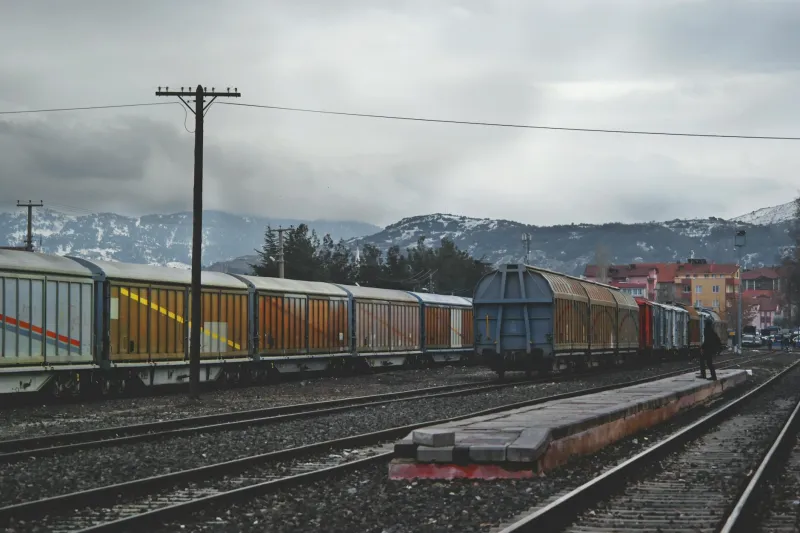
Most college coaches learn their trade in gymnasiums and lecture halls. Frank "Boxcar" Morrison learned his riding the rails between Seattle and Miami, with a duffel bag full of borrowed philosophy books and a notebook that never left his pocket.
 Photo: Frank "Boxcar" Morrison, via www.thecollectionshop.com
Between 1954 and 1961, Morrison rode more than 200,000 miles on freight trains, working seasonal jobs and reading everything he could get his hands on. Plato in a grain car outside Topeka. Nietzsche in a cattle car through Montana. William James while waiting for a connection in the Denver yards.
"I was getting a different kind of education," Morrison would later tell reporters. "Every depot was a classroom. Every conversation was a case study in human nature."
He had no idea he was preparing for a coaching career that would produce twelve Division I champions and revolutionize how America thought about athletic psychology.
The Accidental Conversation
The turning point came on a February morning in 1962 at the Southern Pacific depot in Tucson. Morrison was waiting for an eastbound freight when he struck up a conversation with a man in a University of Arizona jacket. The man, assistant athletic director Tom Walsh, was complaining about the track team's mental approach to competition.
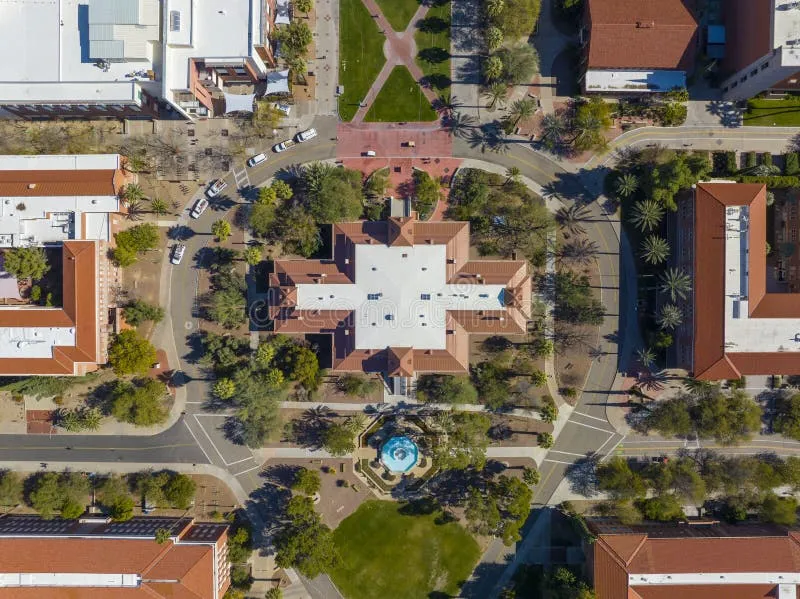 Photo: University of Arizona, via thumbs.dreamstime.com
"These kids have all the physical talent in the world," Walsh said, lighting his third cigarette of the morning. "But they fold under pressure like cheap umbrellas. We need someone who understands what makes people tick."
Morrison, who had spent eight years observing human behavior in some of America's most stressful situations, offered a few observations about pressure and performance. Walsh was intrigued. By the time Morrison's freight arrived, he had a job interview scheduled for the following week.
"I hired him because he thought differently than anyone I'd ever met," Walsh recalled years later. "Most coaches talked about training programs and technique. Frank talked about the philosophy of competition and the psychology of belief."
The Freight Train Method
Morrison's coaching philosophy was unlike anything in college athletics. Instead of traditional motivational speeches, he told stories from his years on the rails. Instead of standard training regimens, he designed workouts based on the rhythm and patience he'd learned riding freight trains.
"Frank taught us that competition was like catching a freight train," remembered Jim Kellner, Morrison's first All-American sprinter. "You don't chase it desperately. You position yourself where it's going to be, then you commit completely when the moment comes."
Morrison's training methods were equally unconventional. He had runners practice in complete silence to develop internal rhythm. He organized "pressure sessions" where athletes had to perform while he told distracting stories. Most famously, he required every team member to spend one night sleeping under the stars, "to understand your place in something bigger than yourself."
The Philosophy of Motion
What made Morrison's approach revolutionary wasn't just the techniques - it was the underlying philosophy he'd developed during his years in motion. He understood that athletic performance was fundamentally about managing uncertainty and finding rhythm within chaos.
"Most coaches try to eliminate variables," Morrison explained in a 1968 interview. "I learned on the rails that you can't control variables - you can only control your response to them. A good freight hopper doesn't fight the train's rhythm; he finds his place within it."
This philosophy produced remarkable results. Arizona's track team, which had never finished higher than eighth in conference competition, won three consecutive Pac-8 championships under Morrison's guidance. More importantly, his athletes consistently performed better in high-pressure situations than their training times suggested they should.
The Wanderer's Network
Morrison's success at Arizona led to opportunities at larger programs, but he always maintained the unconventional approach he'd developed riding the rails. At UCLA, he transformed a mediocre distance running program into a national powerhouse. At Oregon, he coached three Olympic medalists in four years.
What few people realized was that Morrison's coaching network extended far beyond college athletics. He maintained correspondence with dozens of people he'd met during his freight-riding years - farmers, factory workers, drifters, and dreamers who had shared their stories in depot waiting rooms and freight car doorways.
"Frank had informants everywhere," laughed former Oregon runner Mike Patterson. "He'd get letters from truck drivers in Wyoming telling him about a high school kid with unusual mental toughness, or from a waitress in Nebraska who'd noticed a young runner's unique training habits."
This network helped Morrison identify talent that traditional scouts missed - athletes who had developed mental strength through hardship rather than conventional coaching.
The Psychology of the Rails
Morrison's greatest insight came from understanding how his freight train years had shaped his own psychology. The uncertainty of never knowing where you'd sleep or when you'd eat had taught him to find calm within chaos. The long hours of solitude had developed his ability to think clearly under pressure.
"Riding freight trains is the ultimate lesson in delayed gratification," Morrison wrote in his 1975 book "The Rolling Classroom." "You might wait six hours for a train, then ride for thirty-six hours straight. You learn patience, but you also learn to act decisively when opportunity appears."
He applied these lessons to athletic training, teaching runners to embrace the discomfort of hard workouts while maintaining long-term focus on distant goals. His athletes learned to find rhythm in chaos and opportunity in uncertainty.
The Championship Philosophy
By the time Morrison retired in 1978, he had coached athletes to forty-three individual NCAA championships and seven team titles. His methods had influenced a generation of coaches who adopted his psychological approach even if they couldn't replicate his unconventional background.
"Frank proved that wisdom comes from experience, not just education," said longtime Stanford coach Brooks Johnson. "He understood competition at a deeper level because he'd lived uncertainty as a way of life."
Morrison's legacy extended beyond championships. His approach to athletic psychology became standard practice in college sports, and his emphasis on mental preparation influenced coaching across multiple sports.
The Lesson of the Rails
Frank Morrison's story reminds us that the most valuable education often happens outside traditional classrooms. His seven years riding freight trains provided insights into human nature and performance that no coaching clinic could have taught.
His success proved that unconventional preparation can lead to conventional excellence - and that sometimes the best way to understand competition is to spend years living it in its rawest form. Morrison found his calling not in a gymnasium, but in the rhythm of steel wheels on railroad tracks, where he learned that the journey itself was the most important teacher.
The hobo coach showed America that wisdom travels on many different rails - and sometimes the most indirect route leads to the most remarkable destinations.