When "Too Late" Became "Just Right"
In 1996, sports medicine textbooks taught that athletic performance peaked between ages 22 and 28, with inevitable decline afterward. That same year, seven American athletes were quietly preparing to demolish that theory with performances that redefined what was possible in the so-called "twilight" of athletic careers.
Their stories share a common thread: each faced a moment when coaches, teammates, or sports officials told them their competitive days were finished. Each chose to prove that conversation spectacularly wrong.
1. Laura Wilkinson - Diving Into History at 22 (But Starting at 15)
Actually, let's start with a different kind of "late bloomer" - one whose peak came when diving experts said she was already past her prime.
Laura Wilkinson didn't touch a diving board until age 15, ancient by diving standards. When she qualified for the 2000 Olympics at 22, coaches whispered she was "too old" for a sport dominated by teenagers. Three months before Sydney, she broke her foot in three places.
"Everyone said I should withdraw and focus on 2004," Wilkinson remembered. "I was already 'old' for diving. Another four years would make me prehistoric."
Instead, she trained in a swimming pool, unable to practice actual dives. At the Olympics, she became the first American woman to win platform diving gold in 36 years, defeating divers six years younger who had been competing since childhood.
2. George Foreman - The 45-Year-Old Hurricane
When George Foreman announced his comeback at age 38 in 1987, boxing experts treated it as a publicity stunt. When he kept winning fights into his forties, they called it a fluke. When he knocked out Michael Moorer to become heavyweight champion at 45, they ran out of explanations.
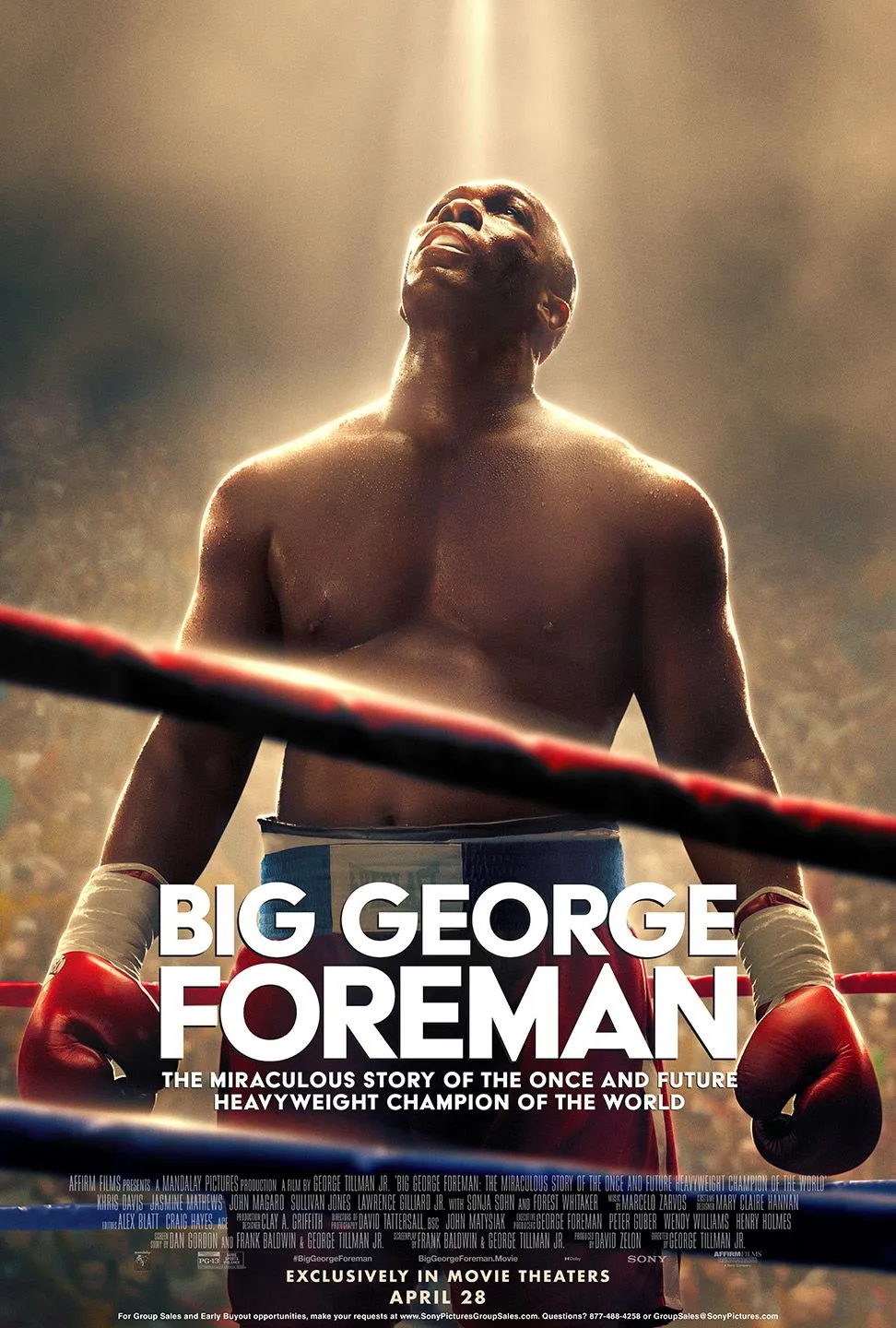 Photo: George Foreman, via static1.moviewebimages.com
"Twenty years after my first title, I was hitting harder than ever," Foreman said. "All those years grilling burgers had given me patience. I didn't need to rush anymore."
Foreman's second championship came 21 years after his first - the longest gap in boxing history. He proved that ring intelligence and patience could overcome the supposed disadvantages of age, inspiring a generation of "older" athletes to extend their careers.
3. Dara Torres - Swimming Against Time at 41
When Dara Torres returned to competitive swimming at age 33 after a seven-year retirement, swimming officials politely welcomed the publicity. When she made the 2008 Olympic team at 41, they stopped talking about publicity and started talking about drug testing.
Torres underwent more drug tests than any athlete in Olympic history - 25 in the six months before Beijing - because officials couldn't believe a 41-year-old could swim faster than she had at 25.
"I was swimming times that would have won medals at previous Olympics," Torres recalled. "My stroke was more efficient, my training was smarter, and my motivation was deeper than it had ever been."
At Beijing, she won three silver medals, missing gold by hundredths of seconds. More importantly, she proved that swimming wasn't just a young person's sport - it was a sport that rewarded experience and refined technique over raw power.
4. Nolan Ryan - Throwing Heat at 46
Most pitchers lose velocity as they age. Nolan Ryan threw his fastest recorded pitch - 103 mph - at age 46, two months before retiring. His seventh no-hitter came at 44, when most pitchers are already in broadcasting booths.
"Young pitchers try to overpower hitters," Ryan explained. "Older pitchers learn to outthink them. When you combine experience with the right arm strength, you become more dangerous, not less."
Ryan's longevity wasn't just about arm strength - it was about evolving his approach to pitching. He threw fewer fastballs but located them better. He developed new pitches to complement his legendary heater. Most importantly, he learned to pitch smarter, not just harder.
5. Jack Nicklaus - The 46-Year-Old Master
When Jack Nicklaus teed off at the 1986 Masters, golf writers were already composing retrospectives about his career. At 46, he hadn't won a major in six years. The game had passed him by, they wrote. Time to step aside for the next generation.
Nicklaus shot 65 in the final round, including a back-nine 30, to win his sixth Masters title. The victory came 23 years after his first major championship - a span longer than many golfers' entire careers.
"Experience taught me when to be aggressive and when to be patient," Nicklaus said. "Young players have better swings. Older players make better decisions."
His Masters victory proved that golf wisdom could overcome declining physical skills, inspiring athletes in all sports to reconsider the relationship between age and performance.
6. Martina Navratilova - Serving Up Surprises at 49
Martina Navratilova won her last Grand Slam title - the mixed doubles at the 2006 U.S. Open - at age 49, playing with a partner young enough to be her son. The victory came 32 years after her first Grand Slam win.
"People kept asking when I was going to retire," Navratilova remembered. "I kept asking why I should, as long as I was still improving."
Navratilova's longevity came from constantly evolving her game. She pioneered fitness training in tennis during the 1980s, then adapted her style to emphasize court positioning and shot selection as her speed declined. Her final Grand Slam proved that athletic intelligence could extend careers far beyond what anyone thought possible.
7. Bernard Hopkins - The 49-Year-Old Executioner
Bernard Hopkins won his last world title at age 49, becoming the oldest boxer ever to claim a major championship. He defeated fighters young enough to be his sons using a style built on patience, ring intelligence, and psychological warfare.
"Young fighters think boxing is about throwing punches," Hopkins explained. "Old fighters know it's about making the other guy miss, then making him pay for missing."
Hopkins fought professionally until age 51, proving that boxing wasn't just about youth and power - it was about timing, strategy, and the kind of ring intelligence that only comes from decades of experience.
The Science of Second Acts
What these athletes shared wasn't just exceptional longevity - it was the ability to reinvent their approach to competition as they aged. They compensated for declining physical attributes by developing superior mental games, better strategy, and more efficient technique.
Sports scientists who studied these athletes discovered that peak performance wasn't just about physical ability - it was about the intersection of experience, motivation, and refined skill. These "over-the-hill" champions had reached that intersection at exactly the right moment.
The Legacy of Late Bloomers
These seven athletes didn't just extend their own careers - they changed how sports viewed aging entirely. They proved that athletic prime wasn't a narrow window in the twenties, but a broader period that could extend well into middle age with the right approach.
More importantly, they showed that being written off could become the greatest motivation of all. Each of these champions used the doubts of others as fuel for performances that redefined what was possible.
Their legacy lives on in every "aging" athlete who refuses to accept that their best days are behind them. They proved that in sports, as in life, it's never too late for a second act - and sometimes the second act is the one that brings down the house.