The Silent Signal Maker: How Baseball's First Deaf Star Created the Language of the Game
The Boy Who Couldn't Hear Strike Three
In the dusty streets of Houcktown, Ohio, a boy named William Hoy watched baseball games from behind the fence, studying every movement with the intensity of a scholar. Born deaf in 1862, Hoy had learned to read the world through his eyes—the way a pitcher's shoulder dipped before a curveball, the subtle shift in a batter's stance, the precise moment when a runner broke for second base.
What he couldn't see were the calls. Balls and strikes were shouted, not shown. Safe and out were declared with words that never reached his ears. But William Hoy was about to change all that.
When Silence Became Strength
By 1886, Hoy had earned a spot with the Oshkosh team in the Northwestern League. Standing just 5'4" and weighing 148 pounds, he looked more like a jockey than a ballplayer. But what he lacked in size, he made up for in vision—both literal and metaphorical.
The problem was immediate and obvious. How could a deaf player know if a pitch was a ball or strike? How could he tell if he was safe at first base when the call came from behind him? Other players might have accepted these limitations. Hoy saw them as puzzles to solve.
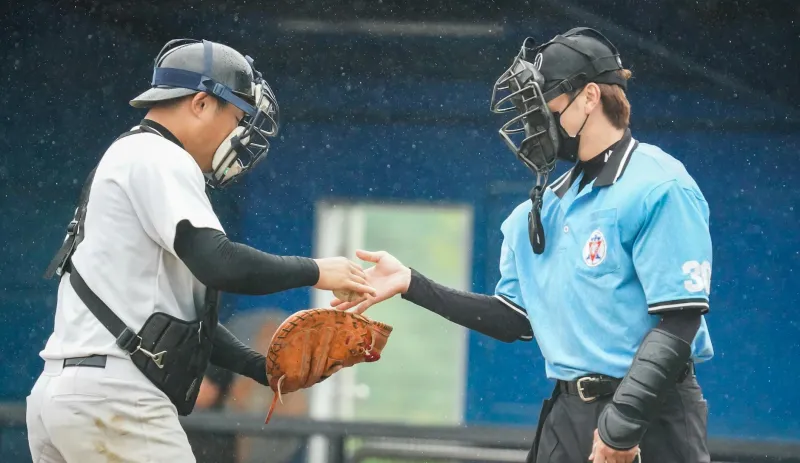
Working with umpires who were initially skeptical, Hoy began developing a system. A raised right hand for strikes. Arms spread wide for safe. A quick jerk of the thumb for out. What started as accommodation for one player slowly became the standard language of baseball.
The Major League Breakthrough
In 1888, Hoy made the jump to the Washington Nationals in the National League. The press, with the casual cruelty of the era, dubbed him "Dummy" Hoy—a nickname that would stick throughout his career and beyond. But Hoy let his performance do the talking.
He could fly around the bases and cover center field like few players of his generation. More importantly, his hand signal system was spreading. Umpires found that the visual calls helped not just Hoy, but every player and fan in the stadium. What began as necessity was becoming innovation.
The Perfect Game That Almost Was
On June 19, 1889, Hoy stepped into the batter's box against pitcher Ed Cushman of the Buffalo Bisons. The crowd in Washington was buzzing—not because of what they might see, but because of what they might witness.
Cushman was having one of those days when everything seemed to find the strike zone. Batter after batter went down. But when Hoy came up in the ninth inning, something extraordinary happened. He worked the count full, then drew a walk—the only baserunner Cushman would allow all day.
The no-hitter was broken up, but Hoy had done something more important. He had shown that a deaf player could not only compete at the highest level but could change the outcome of games through pure baseball intelligence.
Breaking Barriers Beyond the Baselines
Hoy's 14-year major league career included stints with six different teams. He stole 607 bases, scored over 1,400 runs, and maintained a .287 batting average. But the numbers tell only part of the story.
In an era when most Americans viewed deafness as a severe limitation, Hoy was running professional baseball teams ragged. He communicated with teammates through a combination of sign language, lip reading, and pure baseball instinct. Opposing teams tried to gain advantages by hiding their signals from him, only to discover that Hoy's visual awareness was so sharp he could read their intentions anyway.
The Legacy Written in Gestures
Walk into any baseball stadium today, from Little League fields to Yankee Stadium, and you'll see William Hoy's influence. Every time an umpire raises his right hand to signal a strike, spreads his arms to call a runner safe, or jerks his thumb to signal an out, they're using the visual language that Hoy helped create.
The irony is perfect: the player who couldn't hear became the man who taught baseball how to speak with its hands. The "limitation" that was supposed to keep him from the majors became the innovation that improved the game for everyone.
The Hall of Fame Question
Hoy died in 1961, just two years before the Baseball Hall of Fame began seriously considering players from his era. Despite his statistical accomplishments and his transformative impact on the game, he remains outside Cooperstown's walls. The debate continues among baseball historians: should innovation matter as much as statistics?
But perhaps the better question is this: how many Hall of Famers can claim they literally changed the way their sport communicates? How many can say their "disadvantage" became baseball's advantage?
The Quiet Revolutionary
William "Dummy" Hoy never heard a crowd cheer his name, never heard the crack of his bat connecting with a fastball, never heard an umpire call him safe at home plate. But he heard something else entirely—the sound of possibility.
In a world that told him his deafness was a barrier, Hoy built a bridge. In a sport that relied on sound, he created a visual language that endures 130 years later. He didn't just rise from an unlikely place—he lifted the entire game with him.
Every hand signal, every gesture, every visual call in baseball carries the DNA of a small deaf man from Ohio who refused to let silence keep him from speaking to the world.