
The Invisible Education
Marcus Williams had perfected the art of being unseen. For thirty-two years, he'd walked the fairways of Pinehurst Country Club, shoulders bent under the weight of leather golf bags, eyes fixed on yardages and pin positions while wealthy members discussed stock portfolios and weekend plans as if he were part of the landscape.
He knew every blade of grass on the course. He could read wind patterns that confused meteorologists. He understood the psychology of pressure putts better than sports psychologists with corner offices. But Marcus Williams was a caddie, which in the world of elite golf meant he was expected to carry, clean, and calculate—never to coach.
That changed on a humid Thursday in August 1987, when pharmaceutical executive Richard Hartwell was having the worst round of his twenty-year membership.
When Silence Breaks
Hartwell had already thrown his seven-iron into the pond on the twelfth hole. His usual caddie had called in sick, leaving him paired with Marcus for the first time. By the fifteenth tee, Hartwell was ready to quit golf forever.
"I don't know what I'm doing wrong," he muttered, more to himself than to Marcus.
For thirty years, Marcus had heard similar complaints. He'd watched thousands of golfers make the same fundamental mistakes, seen promising swings destroyed by expensive lessons from touring pros who'd never learned to teach. But caddies didn't speak unless spoken to directly.
This time was different.
"Mr. Hartwell," Marcus said quietly, "you mind if I show you something?"
What happened next would become legend at Pinehurst. Marcus didn't just offer a tip—he delivered a fifteen-minute masterclass that revealed decades of accumulated wisdom. He explained how Hartwell's grip was fighting his natural swing plane, how his pre-shot routine was building tension instead of confidence, how his club selection ignored the course's subtle elevation changes that Marcus had memorized down to the inch.
Hartwell shot even par on the final four holes—the best finish of his golfing life.
The Underground University
Word spread quickly through Pinehurst's membership. The caddie who'd been invisible for three decades suddenly had a waiting list. Members discovered that Marcus didn't just carry their bags—he'd been studying their games with the intensity of a graduate student.
But Marcus's real education had come from watching the best. Pinehurst hosted professional tournaments, and Marcus had caddied for touring pros during major events. He'd observed Ben Crenshaw's putting routine up close, studied how Tom Watson managed course strategy, learned from watching Jack Nicklaus prepare for crucial shots.
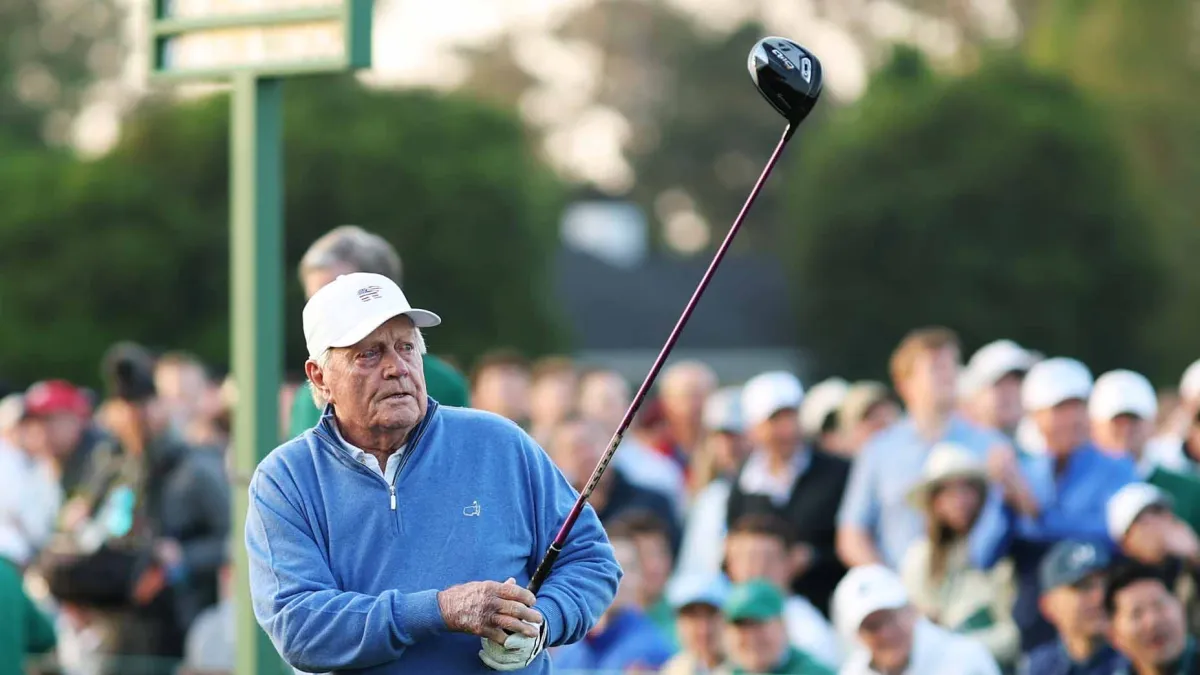 Photo: Jack Nicklaus, via golf.com
 Photo: Ben Crenshaw, via photostylelab.com
More importantly, he'd watched thousands of amateur golfers struggle with the same problems. While expensive instructors focused on perfect form, Marcus had learned to diagnose the root causes of inconsistency. He understood that most golfers failed not because of technique, but because of approach.
The Revelation
By 1990, Marcus had quietly become the most sought-after swing coach in North Carolina. Members who'd never acknowledged his existence were scheduling lessons months in advance. Golf Digest heard about the phenomenon and sent a reporter to investigate.
The interview revealed something extraordinary: Marcus had never taken a formal golf lesson in his life. He'd learned the game by watching, by asking questions during quiet moments, by studying the subtle differences between golfers who succeeded under pressure and those who crumbled.
"I've seen every mistake you can make," Marcus told the reporter. "But more than that, I've seen what works. Not just in perfect conditions with perfect form, but when it's windy, when you're nervous, when nothing feels right. That's when you really learn about golf."
The Science of Observation
Marcus's success challenged everything the golf world believed about expertise. While traditional instructors focused on biomechanics and video analysis, Marcus had developed an intuitive understanding of what made golfers successful. His methods seemed simple, but they were built on thousands of hours of careful observation.
He could spot a golfer's tendencies after three swings. He understood how personality affected performance—which players needed encouragement, which responded to technical challenges, which performed better when left alone to find their own rhythm. This wasn't luck or natural talent; it was the accumulated wisdom of someone who'd paid attention when everyone assumed he wasn't listening.
Beyond the Fairway
Marcus Williams eventually opened his own golf academy, but his real legacy lies in what his story reveals about learning and expertise. In a culture obsessed with credentials and formal education, Marcus proved that deep knowledge often comes from unexpected places.
His three decades of "invisible" work weren't wasted years—they were a master class in observation, patience, and understanding human nature under pressure. While others focused on the mechanics of golf swings, Marcus learned the psychology of golf success.
Today, some of the sport's most successful instructors trace their methods back to principles Marcus developed during his years of carrying bags and keeping quiet. His story reminds us that the most profound education often happens in the margins, taught by teachers who've learned to see what others miss.
The next time you encounter someone whose job seems routine or invisible, remember Marcus Williams. Sometimes the greatest expertise is hiding in plain sight, waiting for the right moment to step forward and share what thirty years of watching has taught.