They Showed Up Without an Invitation and Stayed Anyway
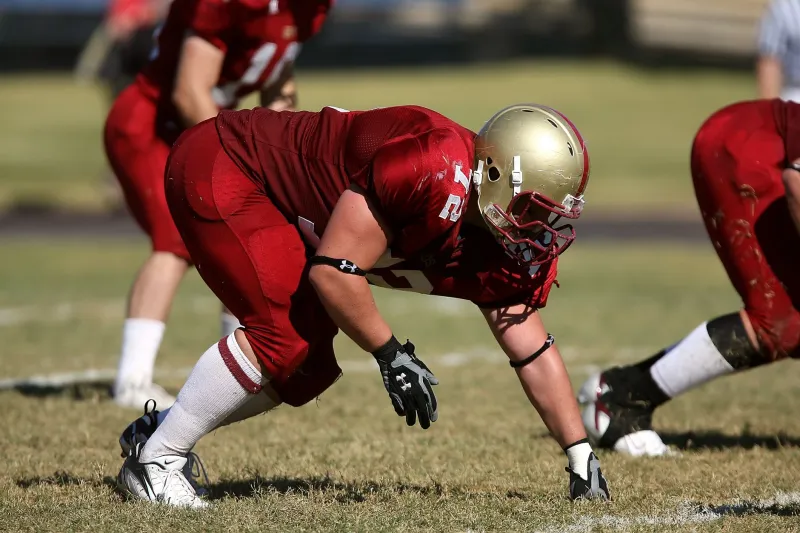
There's a particular kind of audacity required to walk into a Division I football program without a scholarship offer and announce, through sheer presence, that you belong there. No one asked you to come. The coaches have already filled their roster with players they recruited, evaluated, and chose. The locker room is full of young men who were promised something. You weren't promised anything.
And yet, across the long history of college football, certain players arrived exactly this way — unannounced, unbidden, and ultimately unforgettable.
What It Actually Means to Walk On
The term "walk-on" gets used loosely, but the experience it describes is specific and often brutal. Walk-ons typically pay their own tuition, fight for practice reps that scholarship players receive by default, and occupy a status in the program that is, at least initially, somewhere between tolerated and invisible. They carry their own equipment. They get the last pick of practice jerseys. They are, by institutional logic, not quite full members of the team.
What they have, in the cases worth telling, is something that can't be recruited or evaluated on a highlight tape: an almost irrational refusal to accept the verdict that the system has already rendered on them.
The Kid From Nowhere, Kansas
When Jason Simmons drove himself to Kansas State in the summer of 1994, he had a duffel bag, a used car with questionable air conditioning, and a letter confirming that he was welcome to try out — not that he had made the team. He'd grown up in a town of fewer than two thousand people, played six-man football in high school, and been largely ignored by every major program that had seen his film.
Simmons spent his first two seasons at K-State doing the invisible work: holding blocking dummies, running scout team plays, absorbing contact on behalf of scholarship players who would see game time while he watched from the sideline. Coaches noticed his film study habits. They noticed that he was almost never in the wrong position, even when the play had broken down entirely.
By his junior year, he had earned a starting role. By his senior year, he was a team captain — a distinction voted on by the players themselves, which made it mean more than any coaching decision could have. He went undrafted but spent two seasons on an NFL practice squad, which is not a small thing for a kid who once had to talk his way into a tryout.
The Lineman Who Refused to Be Invisible
The offensive line is where walk-on stories often find their most honest expression, because the position rewards exactly the qualities that a scholarship-free path tends to build: toughness, intelligence, and a chip that never quite goes away.
Marco Flores walked on at a Big Ten program in the mid-2000s after being told, politely but clearly, that he was too small and too slow for the level. He was neither a star nor a prospect. He was a kid from a working-class family in central Ohio who had grown up watching games on a television his father had bought secondhand and who could not imagine doing anything else with the next four years of his life.
Flores redshirted. He lifted. He studied film with the kind of commitment that coaches describe as almost eerie — arriving before the building officially opened, staying until someone turned the lights off. When he finally got meaningful playing time in his redshirt sophomore year, the coaching staff had to recalibrate their evaluations. He wasn't supposed to be this good. The metrics hadn't predicted it. But there he was, winning his battles in ways that didn't always show up in the box score but showed up unmistakably on film.
He started for two full seasons, earned All-Conference honorable mention recognition, and later became a graduate assistant coach at the same program that had once accepted him with a shrug. He now coaches offensive line at a mid-major program, and his players will tell you that he has a particular gift for developing the ones nobody else wanted.
The Moment Everything Shifts
Every walk-on who makes it can identify a specific moment when the dynamic in the room changed. It's rarely a single spectacular play. More often, it's a moment of quiet competence in a situation where the player had no reason to perform well and every reason to fall apart.
For running back Devon Carver, who walked on at a Southeastern Conference program in the early 2010s, that moment came in a spring scrimmage that no one outside the program would ever see. The first-team defense was fresh. Carver was running with the third-team offense. He took a handoff, found a crease that didn't exist on the play diagram, and turned a likely two-yard loss into a twelve-yard gain that left three scholarship linebackers grabbing air.
The head coach said nothing in the moment. But the next day's practice schedule had Carver listed with the second team. Two weeks later, with the first. He never looked back.
Operating Without a Safety Net
There is a psychological dimension to the walk-on experience that scholarship players rarely encounter in the same way. When you have nothing guaranteed, every practice is an audition. Every rep matters in a way that can either sharpen you or break you, and the players who survive the process tend to develop a specific kind of mental toughness that is genuinely difficult to manufacture in any other environment.
Sports psychologists who work with college programs will tell you that walk-ons, as a group, tend to score unusually high on measures of intrinsic motivation — they are playing, at the most fundamental level, because they love the game and because they have something to prove. That combination, when it's genuine, is one of the most powerful forces in competitive sport.
The players in this story didn't have the luxury of coasting on their recruiting rankings. They didn't have a backup plan. They had the game, and they had whatever they were made of, and most days that was exactly enough.
What They Left Behind
The walk-ons who became legends — who earned the starting jobs, the captaincies, the respect of coaches who had once barely known their names — left something behind in the programs they came through. They left a standard. An argument, made in practice every day for years, that the most important quality a player can have is not the one that shows up on a recruiting service star rating.
That argument matters in college football, where the machinery of recruitment can make it easy to forget that the game is ultimately decided by who wants it most when the lights are brightest and the outcome is uncertain.
The walk-ons who made it never forgot that. They couldn't afford to. And in the end, that's exactly what made them worth remembering.