Built Wrong, Played Right: Seven NFL Legends Whose Bodies Were Supposed to End Their Careers Before They Started

Every spring, NFL scouts descend on Indianapolis with clipboards, stopwatches, and a shared belief that the human body can be evaluated like a machine part. Height, weight, arm length, forty-yard dash time — the numbers go into spreadsheets and the spreadsheets produce verdicts. It's an efficient system. It's also been spectacularly, repeatedly wrong.
The history of professional football is full of players who arrived at the wrong measurements and left with the right results. These seven men didn't just succeed despite what scouts said about their bodies. They succeeded in ways that permanently changed how the game was understood.
1. Doug Flutie — Too Short to See Over the Line
At five-foot-nine, Doug Flutie was told by virtually every NFL evaluator that he was simply too small to play quarterback at the professional level. The logic was straightforward: you can't throw over defensive linemen you can't see over. Flutie won the Heisman Trophy in 1984 and threw one of the most famous passes in college football history — a Hail Mary against Miami that still gets replayed forty years later — and NFL teams still largely passed.
 Photo: Doug Flutie, via c8.alamy.com
He spent years proving himself in the USFL and the CFL, where he became one of the most dominant players in Canadian football history, winning six Grey Cups and eight Most Outstanding Player awards. When the NFL finally gave him a real shot in 1998 with the Buffalo Bills, he was thirty-six years old and proceeded to have one of the best seasons of any quarterback on the roster that year.
What scouts couldn't measure was Flutie's pocket mobility, his ability to extend plays, and his competitive instinct. His size, which looked like a liability on paper, made him harder to sack and gave him angles that taller quarterbacks couldn't create. The NFL spent fifteen years being wrong about Doug Flutie.
2. Warrick Dunn — Too Thin to Survive Contact
When Warrick Dunn came out of Florida State in 1997, the concern wasn't his speed or his vision or his football intelligence. It was his body. At five-foot-eight and 180 pounds, scouts worried he'd be destroyed by NFL linebackers. Running backs needed to absorb punishment. Dunn, the thinking went, was built like a wide receiver.
Dunn played twelve NFL seasons. He rushed for over 10,000 yards, made three Pro Bowls, and was consistently one of the most elusive backs in the league. His slight frame wasn't a weakness — it was a feature. He was nearly impossible to get a clean hit on because defenders couldn't square up against someone who changed direction faster than they could react.
Off the field, Dunn built a nonprofit housing program that has helped over 200 single-parent families purchase their first homes. The same determination that made scouts nervous apparently had other applications.
3. Hines Ward — Hands That Weren't Supposed to Catch
Hines Ward ran a 4.65 forty at the 1998 combine. For a wide receiver, that number is a near-death sentence in the draft evaluation world. Speed is the currency of the position. Ward's was considered insufficient. He fell to the third round.
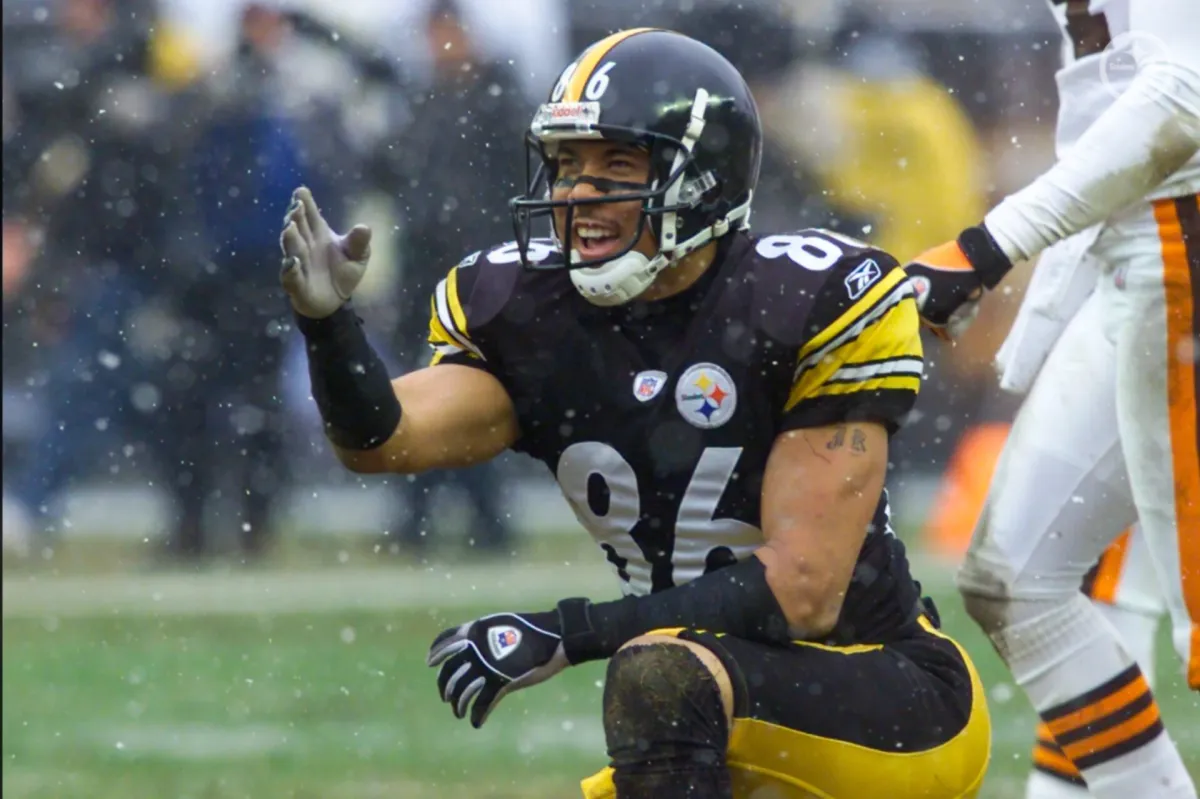 Photo: Hines Ward, via www.steelcityunderground.com
He retired as one of the most productive receivers in Pittsburgh Steelers history, with 1,000 career receptions, two Super Bowl rings, and a Super Bowl MVP award. Ward's game was built entirely around things the combine doesn't test — blocking (he was arguably the best blocking receiver of his generation), toughness over the middle, and route precision that made his modest speed completely irrelevant.
Scouts had measured his speed. Nobody had measured his willingness to run a crossing route knowing a safety was going to hit him the moment the ball arrived.
4. Russell Wilson — The Height Problem, Again
The NFL's complicated relationship with short quarterbacks didn't end with Flutie. When Russell Wilson declared for the 2012 draft, the conversation was almost identical to the one scouts had about Flutie three decades earlier. At five-foot-eleven, Wilson was considered undersized for the position. He fell to the third round.
What followed is now history. Wilson won a Super Bowl in his second season, made nine Pro Bowls, and spent a decade as one of the most efficient passers in the league. His mobility — directly connected to the compact, low-center-of-gravity frame that concerned scouts — made him one of the most difficult quarterbacks in history to sack.
The NFL has now produced enough short quarterbacks who succeeded that the height argument should be retired. It hasn't been.
5. Tedy Bruschi — Too Small to Play Linebacker
Tedy Bruschi was listed at six feet and 247 pounds coming out of Arizona in 1996. For a linebacker in the NFL, those numbers suggested a career as a backup or a special teams contributor at best. True linebackers were bigger. The position required size to hold up against NFL offensive linemen.
Bruschi played thirteen seasons for the New England Patriots, won three Super Bowls, and became one of the most respected defensive players of his era. His football IQ and his instincts for reading plays made the size question irrelevant. He was almost always in the right place because he'd already figured out where the ball was going.
In 2005, he suffered a stroke at thirty-one. He came back and played three more seasons. The body that scouts thought was too small turned out to be considerably tougher than anyone had estimated.
6. Wes Welker — Every Measurable Was Wrong
Wes Welker went undrafted in 2004. He was five-foot-nine, ran a modest forty, and didn't project as a starting receiver at any level. He spent time on practice squads and was released multiple times before catching on with the New England Patriots in 2007.
Over the next seven seasons, he led the NFL in receptions five times. His ability to find and exploit the tiny gaps in zone coverages — a skill that requires football intelligence, not physical dominance — made him one of the most productive slot receivers in league history. No measurable at the combine tests the ability to read a defense before the snap and find the exact six inches of space a linebacker is going to vacate.
Welker's career is essentially a complete refutation of the combine as a predictive tool for slot receivers.
7. Antonio Gates — Never Played College Football
Antonio Gates didn't play college football. He played basketball at Kent State. When he showed up to try out for the San Diego Chargers as an undrafted free agent in 2003, he was an experiment, not a prospect. Tight ends needed blocking experience, route precision, and years of working within offensive systems. Gates had none of that.
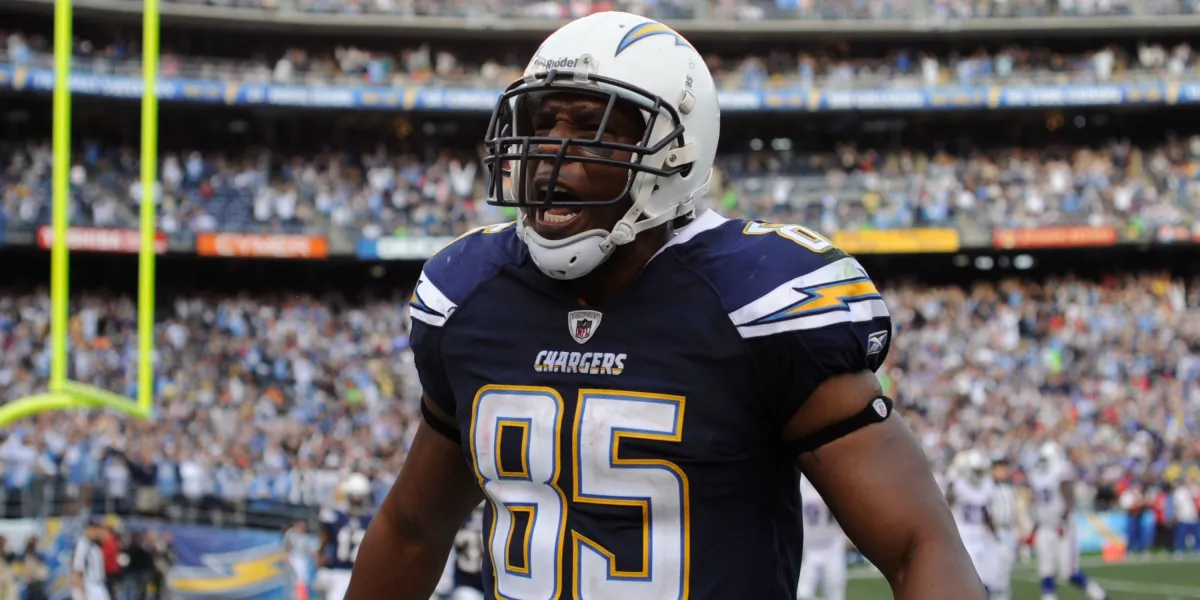 Photo: Antonio Gates, via static0.givemesportimages.com
He made eight Pro Bowls. His basketball background gave him a catching ability and body control that traditionally developed tight ends simply didn't have. His lack of football experience, which looked like a disqualifying gap, turned out to be irrelevant next to the physical gifts and competitive instincts he'd developed in a completely different sport.
What the Numbers Keep Missing
These seven careers share a single thread: every one of these players possessed something that the NFL's evaluation machinery wasn't designed to measure. Competitive fury. Positional intelligence. The ability to make a physical limitation into a tactical weapon.
The combine will keep running. Scouts will keep measuring. And somewhere in a later round, or on an undrafted free agent list, or on a practice squad that most fans never look at, the next player whose body is supposedly all wrong will be quietly getting ready to prove the whole system wrong one more time.