Freight Town Fighters: Seven Kids Who Grew Up Beside the Tracks and Took On the World
When the Train Doesn't Stop for You
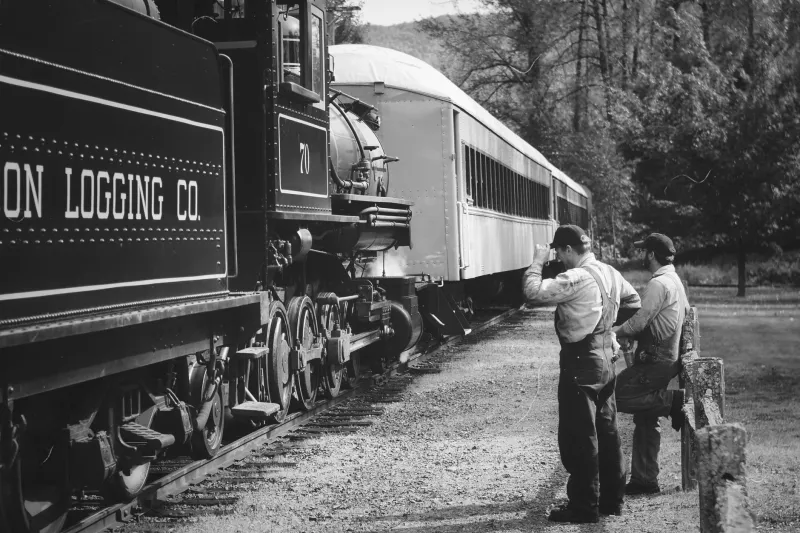
There's a particular kind of restlessness that comes from growing up in a railroad town. You learn early that the world moves on a schedule — and that schedule wasn't built with your town in mind. The freight cars roll through carrying things you'll never own, heading toward cities you can only imagine. You stand at the crossing gate and you wait, and while you wait, something either dies in you or catches fire.
For these seven athletes, it caught fire.
From the coal-dusted depots of Appalachia to the sun-baked switching yards of West Texas, these are the stories of competitors who turned proximity to departure into the most powerful fuel imaginable: the hunger to go somewhere, to be something, to make the world notice a town it kept passing by.
1. Jesse Owens — Oakville, Alabama
Before Jesse Owens became the man who humiliated Hitler's master race theory in Berlin, he was a skinny kid in Oakville, Alabama, a cotton-farming community so small it barely qualified as a dot on a map. The Owens family eventually joined the Great Migration north to Cleveland, chasing the same industrial promise that pulled thousands of Black families away from the rural South.
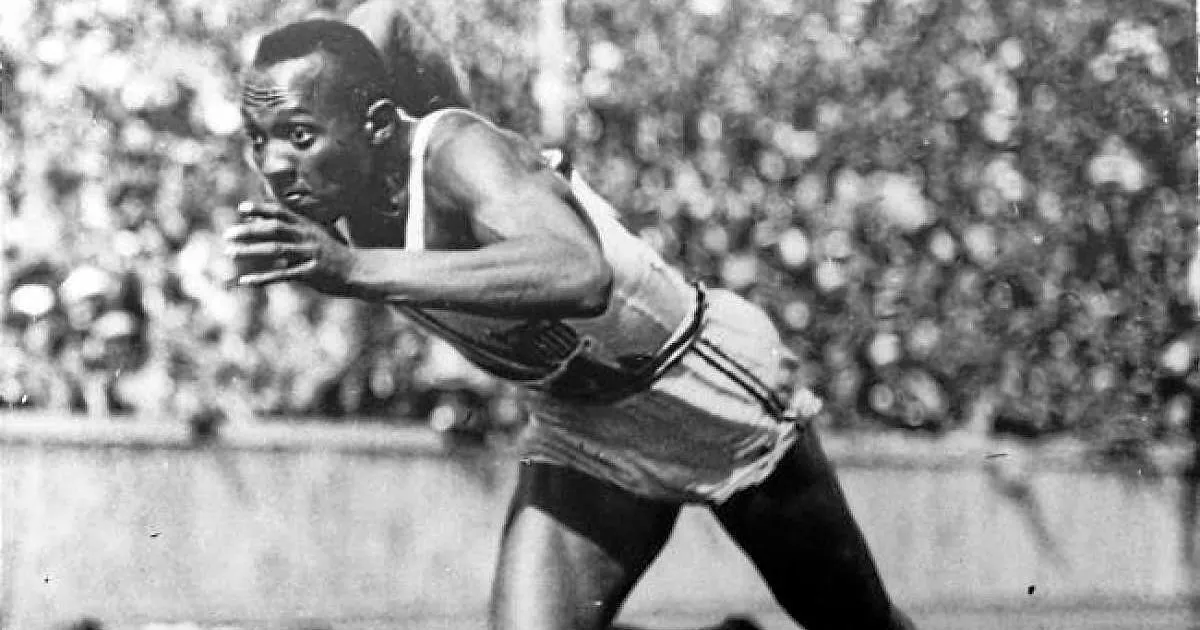 Photo: Jesse Owens, via bloximages.newyork1.vip.townnews.com
But the foundation was laid in Alabama, in a place where the railroad represented something abstract and powerful — movement, escape, a world beyond the field. Owens ran the way kids from places like that run: like something is chasing you, and also like something is waiting for you just over the horizon. In 1936, the whole world found out what that combination looks like at full speed. Four gold medals. One afternoon. A legend born from a town that barely exists on any map.
2. Althea Gibson — Silver, South Carolina
Althea Gibson was born in Clarendon County, South Carolina, a stretch of rural flatland where sharecropping was still the dominant economic reality and the nearest tennis court was a concept from another universe. Her family moved to Harlem when she was young, but the early years in a place defined by its distance from everything left marks that never fully faded.
Gibson became the first Black player to compete at the US Nationals and Wimbledon, winning both in 1957 and 1958. She did it with a ferocity that people who hadn't grown up watching everything good pass them by sometimes struggled to understand. She had spent her early years in a place where the railroad was the only evidence that the wider world existed. She spent her adult life making sure the wider world knew she existed right back.
3. Stan Musial — Donora, Pennsylvania
Donora sat along the Monongahela River in southwestern Pennsylvania, a zinc-smelting town so polluted it would eventually become infamous for a 1948 smog disaster that killed twenty people and sickened thousands. The town's entire economy was built around the railroad and the industrial plants it served. Growing up there meant breathing metal and watching freight trains haul away products your family helped make for wages that barely covered the rent.
Stan Musial turned all of that into a baseball swing so pure it became the stuff of geometry textbooks. Seven batting titles, three World Series championships, and a career .331 average built from the bottom of a Pennsylvania river valley where the smoke never fully cleared. The Cardinals retired his number. Donora put up a statue. The trains kept rolling through, but this time they were carrying his name somewhere new every single day.
4. Wilma Rudolph — Clarksville, Tennessee
Clarksville, Tennessee sits just north of Nashville, and in the 1940s and 1950s, it was a town where the railroad defined the economic rhythm and racial segregation defined nearly everything else. Wilma Rudolph was born prematurely, the twentieth of twenty-two children, and spent her early years battling polio, scarlet fever, and double pneumonia. Doctors told her family she would never walk normally.
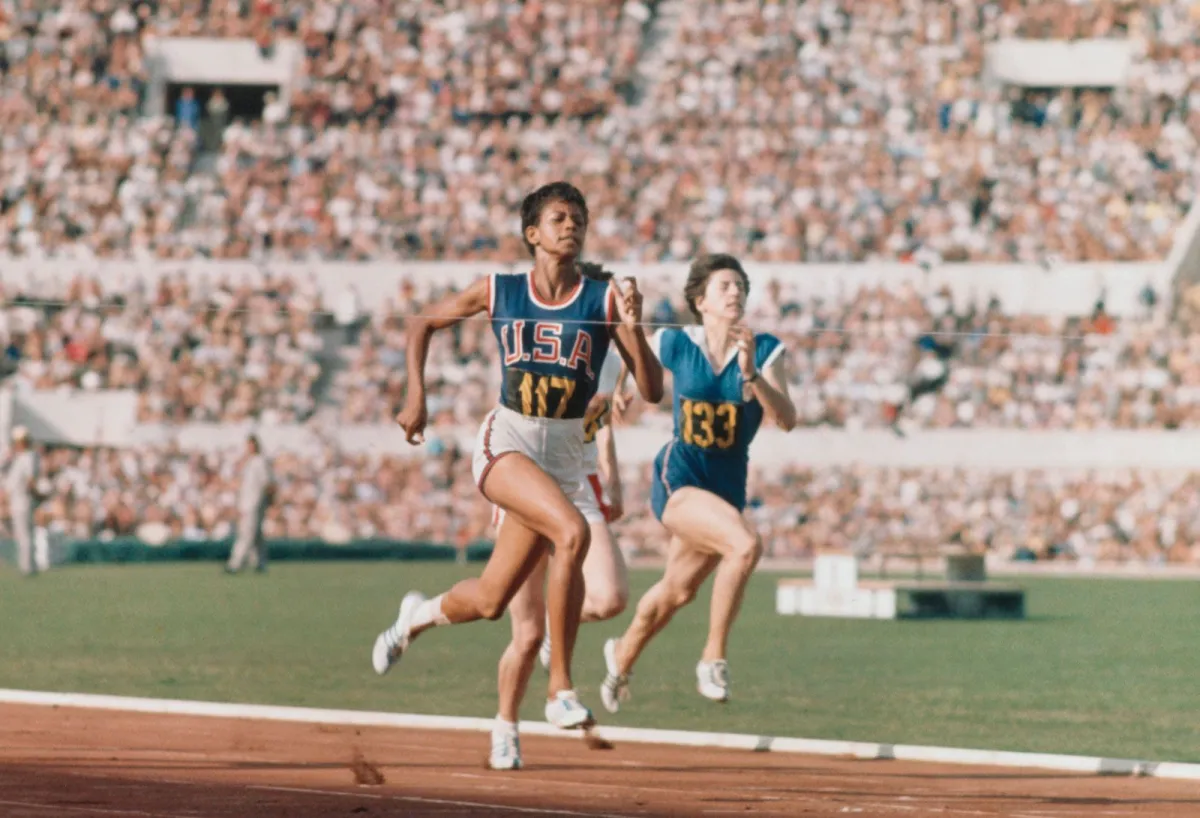 Photo: Wilma Rudolph, via cdn.britannica.com
She won three gold medals at the 1960 Rome Olympics, becoming the fastest woman in the world.
The distance between those two facts — the sick child in the Tennessee railroad town and the woman standing on an Olympic podium — is one of the most staggering journeys in American sports history. Rudolph later said that growing up watching the world move past without stopping for her community made her determined to be the one doing the moving. She moved faster than anyone alive.
5. Rocky Marciano — Brockton, Massachusetts
Brockton was a shoe-manufacturing city south of Boston, built around the factories and the rail lines that served them. By the time Rocky Marciano was growing up there during the Depression, the shoe industry was contracting and the town was contracting with it. His father worked in the factories. The family scraped.
Marciano tried baseball first, then got cut. He found boxing almost by accident and pursued it with the single-minded intensity of someone who has run out of backup plans. He retired as the only undefeated heavyweight champion in history — 49 fights, 49 wins, 43 knockouts. The kid from the shrinking factory town built a record that has never been touched, and likely never will be. Brockton still claims him like a birthright.
6. Archie Moore — Benoit, Mississippi
Benoit is a Delta town so small that calling it a town is almost generous. Archie Moore grew up there in the 1920s, in the deep poverty of the Mississippi Delta, where the railroad was more symbol than resource — a reminder that the rest of the world existed and had decided not to include you in its plans.
Moore became one of the greatest light heavyweight boxers in history, holding the world championship for nearly a decade and fighting well into his forties with a technical brilliance that baffled opponents half his age. He knocked out more opponents than any fighter in boxing history — a record that still stands. The Delta produced a lot of things America eventually claimed as its own. Archie Moore was one of its most overlooked exports.
7. Jim Thorpe — Prague, Oklahoma
Prague, Oklahoma in the late 1800s was a frontier town in every sense — raw, transient, and defined by the railroad lines that were stitching the new state together. Jim Thorpe, of Sac and Fox Nation heritage, grew up in that environment with one foot in two worlds and a full welcome in neither.
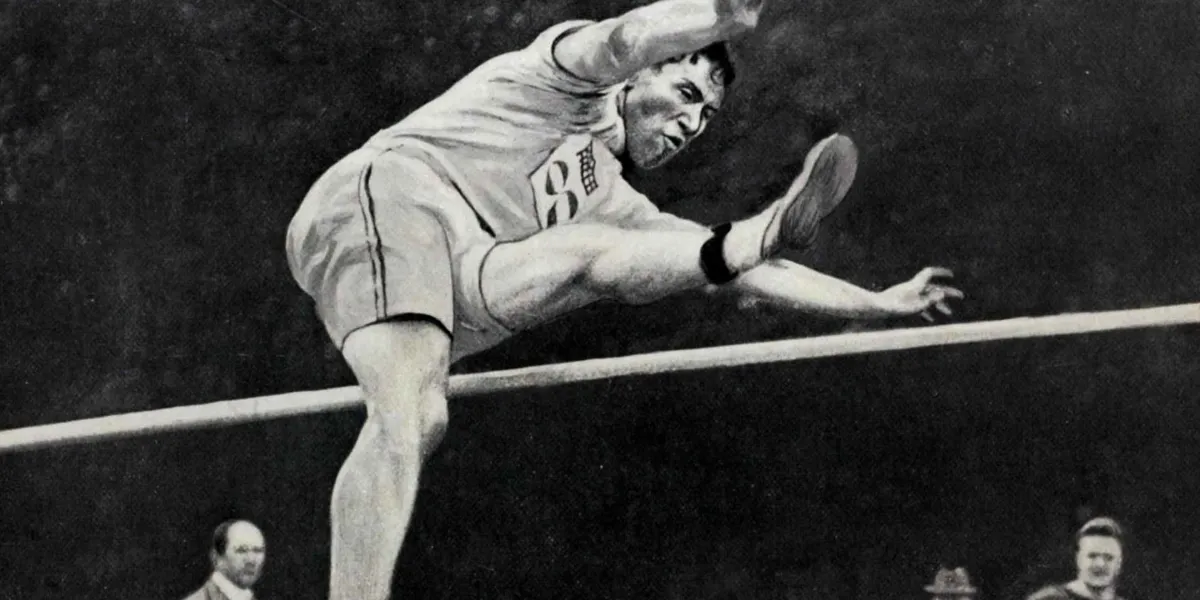 Photo: Jim Thorpe, via res.cloudinary.com
He won gold medals in the pentathlon and decathlon at the 1912 Stockholm Olympics, was called the greatest athlete in the world by the King of Sweden, and then had his medals stripped over a technicality that would look petty even by the standards of the era. He went on to play professional baseball and become one of the foundational figures of the early NFL. The medals were eventually restored, posthumously. The greatness never needed restoration — it was always obvious to anyone paying attention.
What the Crossing Gate Teaches
There's no single formula that explains why railroad towns produced so many extraordinary competitors. The poverty was real, the isolation was real, and the disadvantages were real. But so was something harder to quantify: the daily education in impermanence, in watching resources and opportunities move toward somewhere else, in understanding viscerally that if you wanted to go somewhere, you were going to have to build your own engine.
These seven athletes came from different sports, different eras, different racial and cultural backgrounds. What they shared was the particular hunger of kids who grew up at the crossing — watching, waiting, and eventually deciding that the next thing departing from their town was going to be them.