The Basement Archivist: A School Janitor Spent Fifty Years Saving the Athletes Nobody Remembered
The boxes weren't labeled well. That was the first thing Margaret Hollis noticed when she found them — stacked four deep in a corner of the maintenance room at Cartwell Regional High School in western Pennsylvania, tucked behind a broken folding table and a shelf of cleaning supplies. Brown cardboard, held together in some cases with packing tape that had long since yellowed and curled at the edges.
She almost didn't open them.
She did.
What she found inside would take her the better part of three years to fully understand — and would ultimately restore the names and stories of dozens of student-athletes who had slipped entirely through the cracks of recorded history.
The Man Behind the Collection
Harold Beem started working at Cartwell Regional in 1963, hired as a custodian shortly after the school consolidated with two smaller rural districts. He was twenty-four years old, a local kid who had grown up in the area and never left. He wasn't a coach. He wasn't a teacher. He pushed a mop and fixed what broke and showed up every day, year after year, while the world around him changed and mostly stayed the same.
At some point in those early years — nobody knows exactly when — Harold started keeping things.
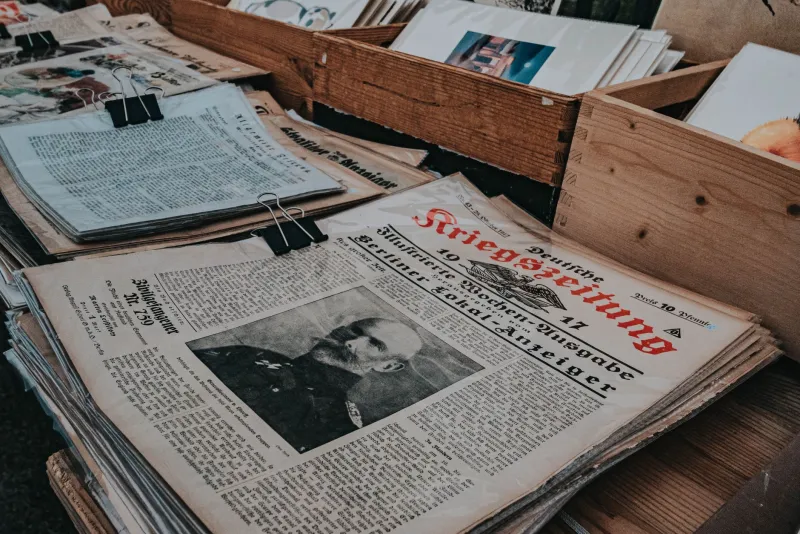
A newspaper clipping from the county sports page. A game program from a Friday night football game. A photograph from the yearbook that he'd asked permission to copy. Notes he wrote himself, in a small, precise hand, about athletes he'd watched compete.
He wasn't systematic about it at first. But over time, the collection developed a kind of logic. Harold organized by year, then by sport, then by athlete. He kept graduation records when he could find them. He tracked players who went on to college — and the ones who didn't. He noted injuries. He noted achievements. He noted the ones who won and the ones who came close.
For fifty years, he kept going.
What the Official Records Missed
Schools keep records, of course. Transcripts, attendance logs, the bare administrative bones of a student's time in the building. What they don't keep — or didn't, in most rural districts through much of the twentieth century — is the texture of athletic achievement. The kid who set an informal school record that nobody thought to certify. The girl's track team that went undefeated in 1971 before girls' sports had a formal structure to recognize them in. The wrestler who competed through a season on a broken hand because his family couldn't afford for him to stop.
Harold kept all of it.
Margaret Hollis, a regional historian working on a county heritage project, had come to Cartwell looking for something else entirely — land records, she thinks, or maybe old school board minutes. A teacher mentioned offhand that the longtime janitor had left some boxes behind when he retired. Harold Beem had passed away eight months earlier, at seventy-nine, with no children and no one who knew exactly what he'd been building in that basement.
Margaret opened the boxes.
The Stories That Came Back
What the archive contained, once Margaret began sorting through it properly, was nothing less than a parallel history of the school — one that ran alongside the official version but captured what the official version had no mechanism to record.
There was James Whitfield, a sprinter from the class of 1968 who had run times in practice, according to Harold's handwritten notes, that would have been competitive at the state level. James had never competed at states. Harold had clipped the brief newspaper mention of why: a family emergency had pulled him out of school for three weeks just before the qualifying meet. He never got another shot. Harold had noted, in his careful handwriting, that James had gone on to work at the mill and coached youth track on weekends for twenty years.
There was the 1974 girls' basketball team, which played an unofficial schedule against other county schools before Pennsylvania had formalized girls' interscholastic athletics. Harold had kept every box score, every program, every scrap of paper related to that team's season. Without his archive, that team's record — seventeen wins, two losses — would have existed nowhere at all.
There was a cross-country runner named Patricia Ostrowski who had placed second in a regional invitational in 1981 and then transferred schools before anyone thought to update the record. Harold had the full results. He had her photograph. He had a note he'd apparently written to himself: good runner, quiet kid, hope things work out.
Why He Did It
Harold never explained himself in writing, and he's no longer around to ask. Margaret pieced together what she could from a few people who remembered him.
A retired coach recalled that Harold had once told him, simply, that he thought it was wrong when people's efforts disappeared. "He said something like — these kids worked hard. Somebody should remember that," the coach told Margaret.
A former student who had stayed in the area remembered Harold watching games from the sideline on Friday nights, a notebook in his jacket pocket. She'd assumed he was keeping personal notes. She hadn't realized the notebooks went into boxes that went into a basement that would outlast him by decades.
He never sought recognition for any of it. As far as anyone knows, he never told anyone the full scope of what he was doing. He just kept doing it.
The Archive Lives On
Margaret Hollis spent three years cataloging Harold's collection. She worked with the school district, the county historical society, and a small team of volunteers to digitize what could be digitized and preserve what couldn't. Several of the athletes Harold had documented — or their families — were contacted when they could be found. Some of them cried when they learned what Harold had kept.
James Whitfield's daughter, who lives outside Pittsburgh, received a photocopy of her father's practice records and Harold's handwritten notes. She had never known her father had been that fast. She'd never known anyone had noticed.
The collection is now housed at the county historical society, accessible to researchers and, more importantly, to the families of the people inside it. Harold Beem's name is on the finding guide — The Beem Athletic Archive, Cartwell Regional High School, 1963–2013 — which is probably more official recognition than he ever would have sought.
Ordinary Keepers
There's a version of history that gets written by the people with titles and platforms and institutional authority. And then there's the version that gets preserved by the people who just thought it mattered — who showed up every day, paid attention, and quietly refused to let things disappear.
Harold Beem was a janitor. He was also, it turns out, the most dedicated sports historian his county ever produced.
Every legend started somewhere. Sometimes the person who made sure the legend survived was the one mopping the hallway outside the gym, taking notes nobody asked for, building something extraordinary out of what everyone else was throwing away.