The Women Who Ran the Lines: How Five Switchboard Operators Quietly Shaped NFL History
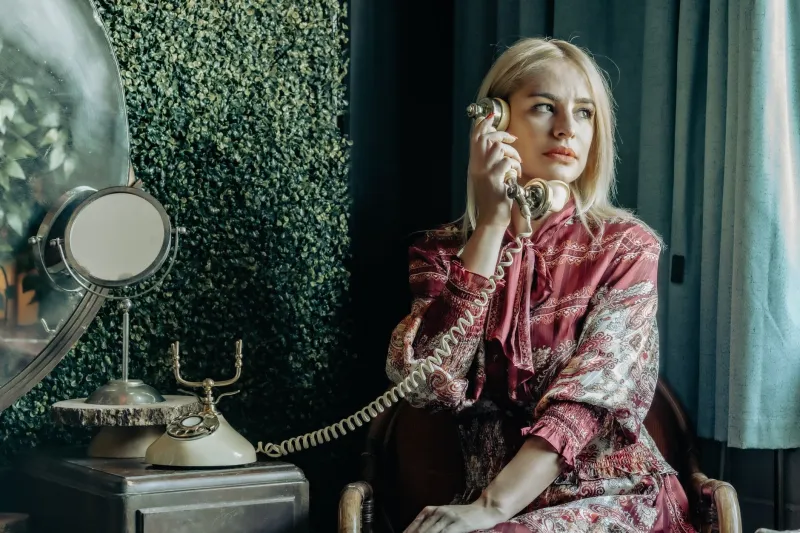
There's a version of NFL history that gets told over and over — the coaches, the quarterbacks, the owners who mortgaged everything on a hunch. But there's another version, quieter and just as true, that lived inside telephone exchanges and cramped front-office hallways, in the hands of women who never got a press credential or a ring.
Before email. Before texting. Before any of it. There was the switchboard.
And for decades, the women who ran them knew more about what was happening inside an NFL organization than almost anyone with a title.
The Intelligence Nobody Recognized
In the 1950s and '60s, NFL front offices were lean operations. A head coach might have one or two assistants, a part-time scout driving a used Buick through the South, and a secretary who doubled as the team's entire communications infrastructure. Calls came in from regional scouts, from college coaches, from agents who weren't yet called agents. Someone had to take those calls, log them, route them, and remember them.
That someone was almost always a woman.
Dorothy Halsey joined the Chicago Bears' front office in 1952 as a receptionist and switchboard operator. Within three years, she was the unofficial clearinghouse for every piece of scouting information that moved through the organization. Coaches learned quickly that if they needed to know whether a scout had called in from Louisiana, or whether the head office had already spoken to a particular college program, Dorothy was the person to ask — not because it was her job title, but because she had paid attention when nobody expected her to.
She kept her own notes. Spiral notebooks, stacked in a cabinet behind her desk, filled with names, dates, and observations that no official system captured. When Bears personnel later recalled the team's draft decisions from that era, more than one of them quietly admitted that Dorothy's recall had been the difference between acting on information and losing it entirely.
Connecting More Than Calls
The switchboard operator's role in mid-century professional football wasn't glamorous, and it wasn't designed to be. The boards themselves were physical puzzles — rows of jacks and cords that required constant attention, patience, and the ability to manage six conversations mentally while conducting a seventh out loud. It was demanding, underpaid work that the industry treated as interchangeable.
But the women who stayed — and some of them stayed for decades — became something the NFL hadn't planned for: institutional memory with a voice.
Ruth Ann Prescott worked for a Midwest franchise through the late 1960s and into the '70s. She later described her role with characteristic understatement: "I knew who called, when they called, what they wanted, and whether they'd called before. After a few years, that's a lot of information."
Coaches began to notice. Not all of them, and not always graciously, but the ones who were paying attention recognized that Ruth Ann could recall a scout's previous notes on a player from two drafts ago faster than anyone else in the building. She wasn't in meetings. She wasn't on the road. But she was, in a very real sense, the connective tissue of the organization.
The Translator at the Desk
Scouting reports in the pre-digital era were famously inconsistent. A scout in Alabama might describe a linebacker using entirely different language than a scout in Ohio. Coaches received handwritten notes, telegrams, and phone messages that required interpretation as much as reading.
Virginia Clements, who worked for an East Coast franchise from 1961 to 1979, became something of a translator for exactly this reason. She had spent enough years routing calls between scouts and coaches that she understood both sides of the conversation — the shorthand the scouts used, the specific concerns the coaches were trying to address. When messages came in garbled or incomplete, Virginia had developed an almost intuitive sense of what was meant versus what was written.
The head coach she worked under for most of that period, a man not known for sentiment, reportedly told a colleague that Virginia "understood the system better than half the people supposedly running it."
She never received a coordinator title. She received a card on her last day and a modest retirement gift.
When the Phone Rang at the Right Moment
Sometimes the influence was less about knowledge and more about timing.
Eleanor Marsh, working for a Southern franchise in the early 1970s, took a call late on a Friday afternoon from a college assistant coach who had information about a player the team had quietly dropped from consideration. The head coach had already left for the weekend. Eleanor made a judgment call — she tracked him down through a chain of phone calls, reached him at a restaurant, and relayed the message.
The team reversed its decision. The player they drafted in the middle rounds became a starter within two years.
Eleanor never made that story public. It surfaced decades later in an oral history project, told by the coach himself, who framed it simply: "She knew it mattered. She figured out how to make it matter. That's not nothing."
Five Women, One Overlooked Truth
Dorothy, Ruth Ann, Virginia, Eleanor, and a fifth woman — Marion Sobieski, who worked in a Great Lakes market franchise from 1958 through the mid-1980s — represent something larger than their individual stories. Marion was known for keeping a mental map of every active scout's travel schedule and for flagging potential conflicts before they became problems. She once redirected a critical draft-related communication that had been misdirected to the wrong office, catching the error before it cost the team a decision window.
None of these women held official influence. None of them sat in draft rooms or drew up contracts. But each of them, in her own way, understood that information is only useful when it reaches the right person at the right time. They made that happen, day after day, year after year, without recognition and largely without complaint.
What the Wires Carried
The NFL became a billion-dollar industry. The switchboards were replaced, the roles were restructured, and the women who had quietly held organizations together moved on or retired into obscurity. Their contributions didn't make the highlight reels or the anniversary retrospectives.
But the teams that won — the ones that stayed ahead of personnel decisions, that moved quickly when it mattered, that retained institutional knowledge through coaching changes and roster upheaval — often had someone like Dorothy or Ruth Ann or Marion somewhere in the building. Someone who understood that the phone call wasn't just a phone call. That the message wasn't just a message.
Every legend started somewhere. Sometimes it started at a switchboard, in a hallway, with a woman who picked up on the second ring and already knew what you needed before you finished asking.