Pennies, Pavement, and a Five-Hundred-Dollar Gamble: How a Hell's Kitchen Errand Boy Built the New York Giants

The Kid Nobody Saw Coming
Hell's Kitchen in the early 1900s wasn't a neighborhood so much as a survival course. The tenements were stacked tight, the streets smelled like horse and coal smoke, and opportunity was something you watched other people enjoy. Timothy James Mara grew up inside all of that, the son of Irish immigrants, and he learned early that if you wanted anything in this city, you had to move faster than everyone else and read people better than a fortune teller.
 Photo: Hell's Kitchen, via static0.thethingsimages.com
So he became a telegram boy.
At twelve years old, Mara was threading himself through Midtown Manhattan, dodging delivery carts, memorizing faces, and absorbing the rhythms of a city that rewarded hustle and punished hesitation. He wasn't delivering messages so much as studying human nature — who tipped, who didn't, who made decisions quickly, who stalled. Every doorstep was a classroom. Every transaction was a lesson in reading a room.
He had no idea he was training for the NFL.
From Street Corners to Bookmaking
Mara never went to college. He never played organized sports at any level worth mentioning. What he did instead was get very, very good at calculating risk. By his twenties, he had graduated from telegram runner to legal bookmaker, operating in the era before off-track betting was driven underground. He set odds on horse races, managed money with precision, and built a reputation in New York's sporting circles as someone whose handshake meant something.
He was charming without being slick. He was ambitious without being reckless. And he had the one quality that separates people who rise from people who merely survive: he was genuinely comfortable with uncertainty.
That comfort would define everything that came next.
The Five-Hundred-Dollar Question
In 1925, the National Football League was a struggling collection of Midwestern teams playing in cities that had more enthusiasm than infrastructure. Professional football was considered a second-rate product — rough, disorganized, and perpetually on the financial edge. Most serious sports investors in New York wanted nothing to do with it.
Tim Mara wanted everything to do with it.
The story, told so many times it has taken on the quality of mythology, goes like this: Mara was approached about purchasing a New York franchise for five hundred dollars. His response was immediate and legendary. He reportedly said that any business franchise in New York City was worth five hundred dollars — even if he didn't fully understand what he was buying yet.
That line tells you everything about the man. He wasn't buying a football team. He was buying a foothold in the largest market in the country, trusting that his instincts about people and commerce would fill in the gaps later.
Building Something From Nothing
The early years of the New York Giants were not glamorous. The team lost money. Crowds were thin. The sport itself was still figuring out what it wanted to be. A lesser businessman — or a wealthier one with more to lose — might have folded quickly and written off the adventure.
Mara dug in.
He approached the franchise the way he'd approached every telegram route and every bookmaking ledger: with patience, precision, and an almost stubborn belief that the math would eventually work out if you stayed disciplined. He made smart hires. He cultivated relationships with the press. He understood, in a way that many of his NFL contemporaries did not, that professional football needed to be marketed as entertainment, not just competition.
He brought Red Grange and the Chicago Bears to the Polo Grounds in 1925 for an exhibition game that drew over seventy thousand fans and essentially saved the Giants franchise from insolvency. That single decision — part gamble, part showmanship — demonstrated exactly the kind of thinking that street-level survival had built in him. When you've grown up with nothing, you know when a moment is too big to let pass.
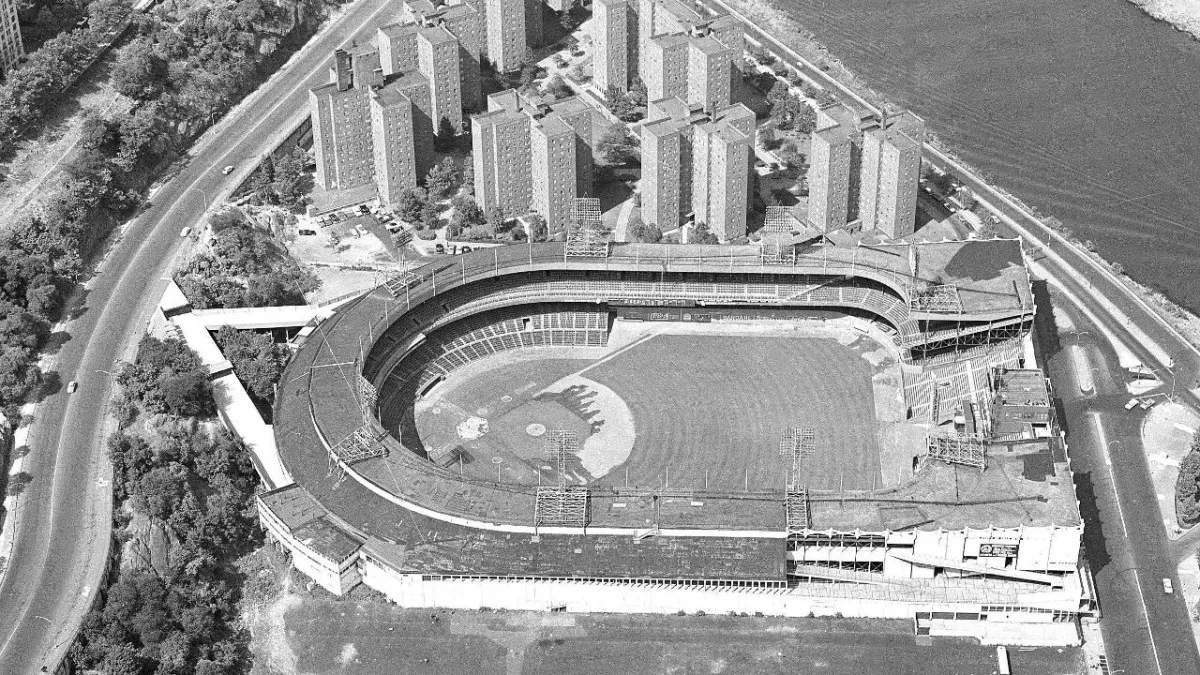 Photo: Polo Grounds, via securea.mlb.com
What the Streets Actually Taught Him
It's tempting to romanticize Mara's story as pure bootstrap mythology — the immigrant kid who made good through grit alone. But the more honest version is more interesting than that.
What Hell's Kitchen and those telegram routes actually gave Mara was an education in human behavior that no business school could replicate. He learned to assess character quickly. He learned to spot loyalty and recognize when someone was performing loyalty while planning an exit. He learned that the people who talk the loudest in any negotiation are rarely the ones holding the strongest hand.
Those skills translated directly into franchise-building. He hired coaches he trusted and gave them room to work. He kept the organization stable when other NFL franchises were lurching from crisis to crisis. He understood that consistency — boring, unglamorous, day-after-day consistency — was what turned a scrappy operation into an institution.
The Dynasty That Outlasted the Man
Tim Mara died in 1959, but the franchise he built on a five-hundred-dollar bet has never left New York, never relocated, and never stopped competing. The Giants have won multiple Super Bowls, produced Hall of Fame players by the dozen, and remained one of the NFL's flagship organizations for a full century.
His descendants have run the team for generations — a family business born from a boy who ran messages through Manhattan because it was the only job available to a kid with no connections and no safety net.
There's something worth sitting with in that lineage. The New York Giants, one of the most storied franchises in American professional sports, traces its DNA directly back to a twelve-year-old threading through Hell's Kitchen with a leather satchel and a sharp pair of eyes.
The Lesson That Doesn't Require a Scoreboard
Mara's story isn't really about football. It's about the particular education that comes from starting with nothing and being forced to learn things that comfort never teaches — how to read people, how to tolerate risk, how to stay steady when the math looks bad and everyone around you is panicking.
The telegram routes were the curriculum. Manhattan's streets were the campus. And five hundred dollars, placed at exactly the right moment by a man who'd spent his entire life learning to spot value where others saw chaos, built something that has lasted a hundred years.
Every legend starts somewhere. This one started with dots and dashes and a kid who was always watching, always calculating, always ready to move.