Two Languages, Two Worlds, One Fighter: The Interpreter Who Became a Boxing Champion
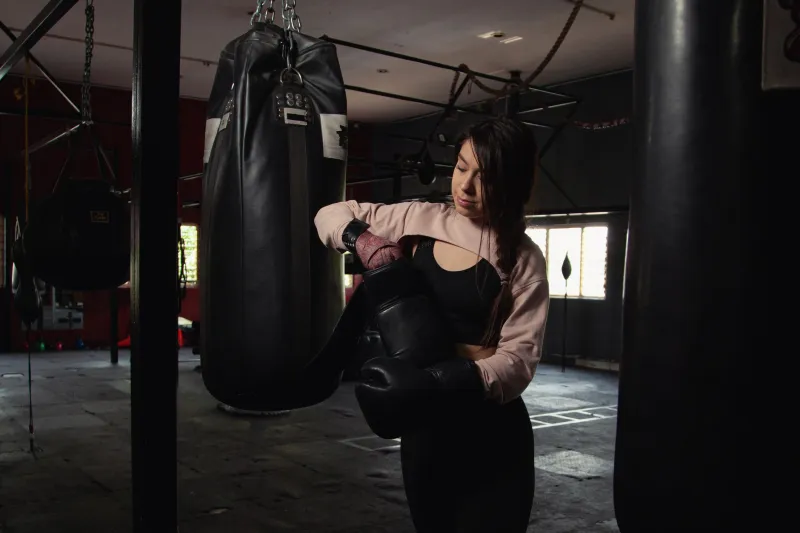
By day, Elena Vasquez sat across a desk from frightened people who didn't speak the language and helped them navigate a system that wasn't designed with them in mind. By night, she wrapped her hands, laced up her gloves, and walked into a gym where the only language that mattered was the one spoken with your feet. She became a regional boxing champion at thirty-eight. Nobody saw it coming. She did.
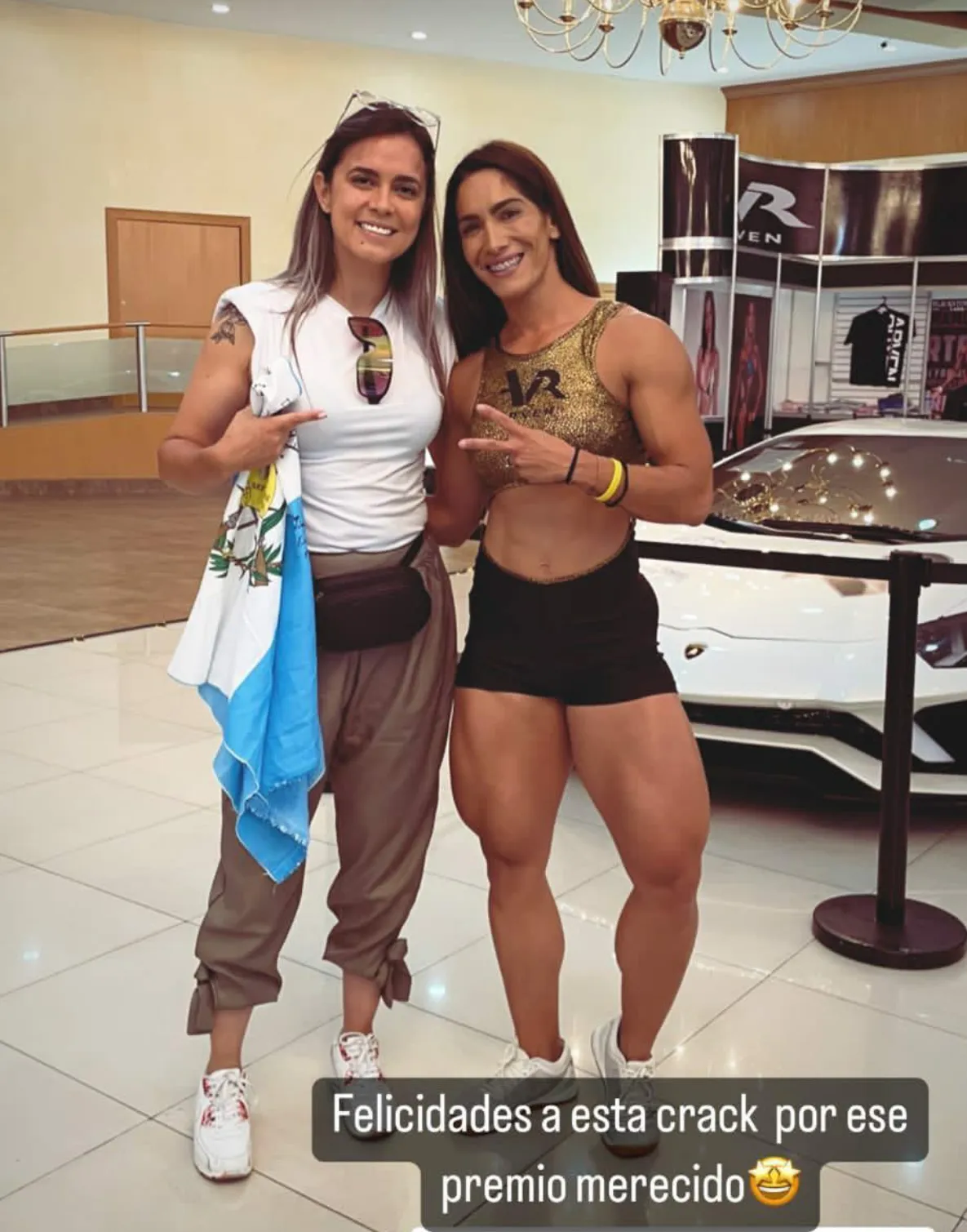 Photo: Elena Vasquez, via www.girlswithmuscle.com
Vasquez grew up in a two-bedroom apartment in a mid-sized southwestern city, the daughter of parents who had crossed into the United States with the specific determination of people who understand, at a cellular level, what the alternative looks like. Her father worked construction. Her mother cleaned offices. Elena translated everything — utility bills, medical forms, school permission slips, the occasional tense conversation with a landlord who assumed no one would push back.
She was eight years old the first time she stood between her mother and a bureaucrat who was using confusion as a weapon. She held her ground. She would keep doing it for the next thirty years.
The Desk and the Gym
Vasquez took her community interpreter position at a social services office in her late twenties, after a stint in community college and a few years doing informal translation work for a local legal aid nonprofit. The job was emotionally demanding in ways that don't show up in a job description — sitting with families in crisis, translating news that was sometimes devastating, maintaining composure when everyone around you was falling apart.
"You learn to hold a lot of weight without showing it," she said in a 2019 profile published by a regional sports magazine. "You can't cry in the middle of someone else's crisis. You can't panic. You have to be steady. I think that's what boxing eventually found in me — I'd already been trained to be steady."
She stumbled into the gym almost by accident. A colleague mentioned a women's boxing fitness class at a neighborhood gym that offered sliding-scale membership fees. Vasquez went once, out of curiosity. She went back the next week. Within a month, she was staying after the fitness class to watch the competitive training sessions. Within three months, the head trainer had pulled her aside to ask if she'd ever considered actually fighting.
She was thirty-three years old. She laughed at him. Then she said yes.
What the Ring Recognized
Boxing is, at its core, a sport of pattern recognition and emotional regulation. You learn to read an opponent's body language — the shoulder drop that telegraphs a right hand, the weight shift that signals a combination is coming — and you learn to respond without panic, without hesitation, without the emotional static that causes most fighters to make costly mistakes under pressure.
Vasquez had been doing a version of this for years. As a professional interpreter, she had learned to read rooms instantly — to gauge when a conversation was about to escalate, when a bureaucrat was stonewalling versus genuinely confused, when a client needed firmness versus gentleness. She had developed a finely tuned threat-assessment system that had nothing to do with boxing and everything to do with it.
"She processed information faster than anyone I'd trained at that level," her coach, a former amateur champion named Dennis Okafor, said. "Most fighters, when they're under pressure, they stop seeing. They react. Elena never stopped seeing. She'd take a shot and immediately be calculating the next three things. That's rare. That's really rare."
Her age, which the conventional boxing wisdom would have flagged as a liability, turned out to be an asset in ways that weren't immediately obvious. She had no ego invested in looking impressive. She had no fear of being hit — she had survived harder things than a jab. She had patience that younger fighters, burning with ambition and adrenaline, simply couldn't sustain.
The Fights Nobody Watched
Vasquez's early competitive record was modest. She won some, lost some, kept training. The regional women's boxing circuit in her weight class was not exactly a heavily covered beat — small venues, sparse crowds, results that rarely made it into any publication with a sports section. She competed quietly, improved steadily, and drew almost no attention from anyone outside her immediate circle.
That obscurity suited her. She had spent her professional life doing essential work that most people never noticed — translating the gap between two worlds, holding space for people who had no one else in the room on their side. Invisibility wasn't new. Neither was doing important things without applause.
At thirty-seven, she won her first regional title fight — a unanimous decision over an opponent eight years her junior who had been favored by every observer who had bothered to form an opinion. Vasquez controlled the distance for all eight rounds, never looked flustered, and landed the cleaner shots in every exchange. The crowd, small as it was, gave her a standing ovation.
The Bigger Story Inside the Story
Vasquez's path is unusual. But the deeper pattern it represents — immigrant resilience converting into athletic achievement through channels that rarely get documented — is far more common than the sports media tends to acknowledge.
First-generation Americans navigate a particular kind of daily difficulty that builds capacities that formal athletic development programs can't manufacture. Code-switching between languages, managing the emotional labor of being a cultural bridge, operating without safety nets while still performing at a high level — these experiences forge a mental architecture that shows up, again and again, in athletes who come from immigrant families and somehow find their way to remarkable competitive achievements.
Vasquez would probably push back on that framing. She doesn't think of herself as a symbol. She thinks of herself as someone who found something she loved late, worked at it seriously, and discovered that a lifetime of learning how to hold her ground had prepared her for a sport that rewards exactly that.
"People always want to know how I got started so late," she said. "I don't think of it as late. I think of it as exactly when I was ready."
That's the thing about rising from anywhere. The timing is rarely what anyone expects. The preparation was always happening — you just didn't know yet what it was preparation for.