The Woman Behind the Numbers: How One Tennessee Seamstress Threaded Her Way Through a Century of American Track and Field
The Measurement That Mattered Most
Every serious runner will tell you the same thing if you press them long enough: what you wear matters more than most people understand. Not in a vanity sense. In a physics sense. A seam placed wrong creates friction. A waistband that shifts costs hundredths of seconds. A leg opening that catches air at full stride is the difference between a personal best and a race you'd rather forget.
For four decades, the athletes who trained and competed out of a small historically Black college in rural Tennessee didn't have to worry about any of that. They had Coretta.
Her full name, reconstructed through family interviews and a handful of archived letters, was Coretta Mae Simmons. She was born in 1908 in a small community outside Clarksville, Tennessee, the granddaughter of sharecroppers and the daughter of a woman who could make a dress from flour sacks that looked like it came from a department store. Coretta learned to sew the way children in that era and that community learned most things — by watching, then doing, then being corrected, then doing again until it was right.
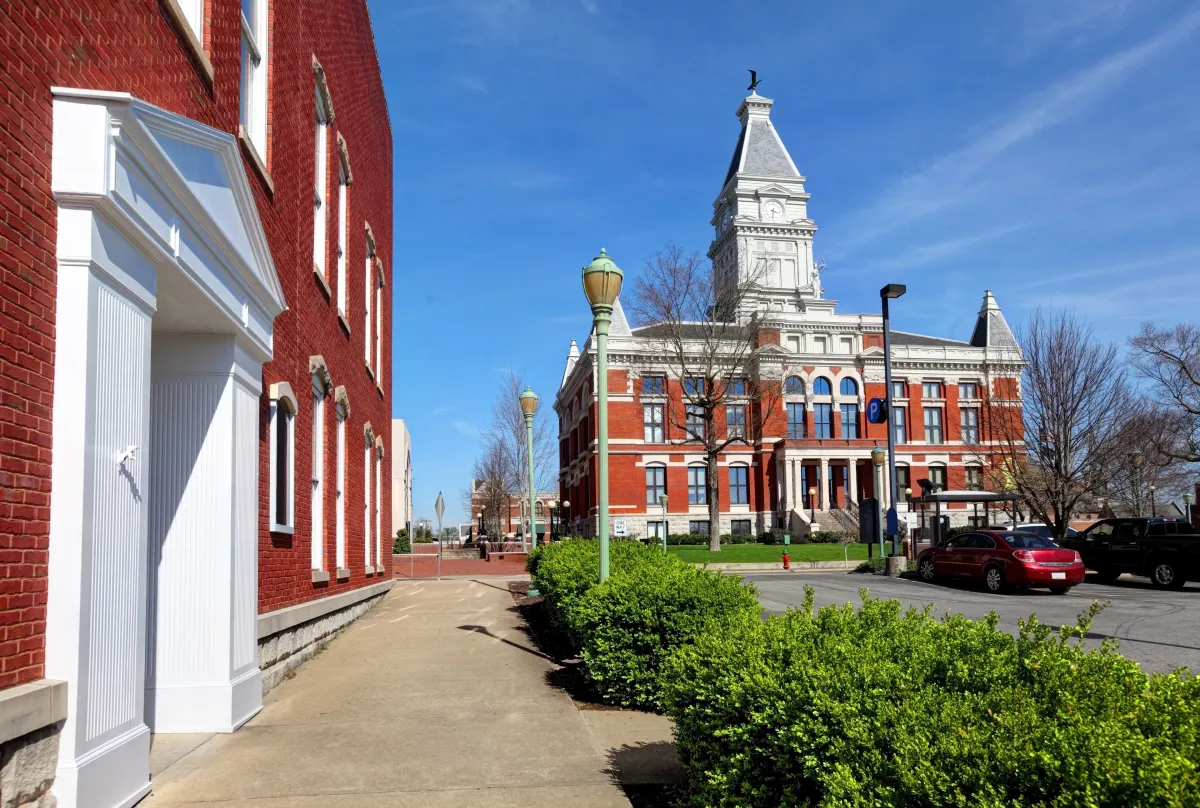 Photo: Clarksville, Tennessee, via mediaim.expedia.com
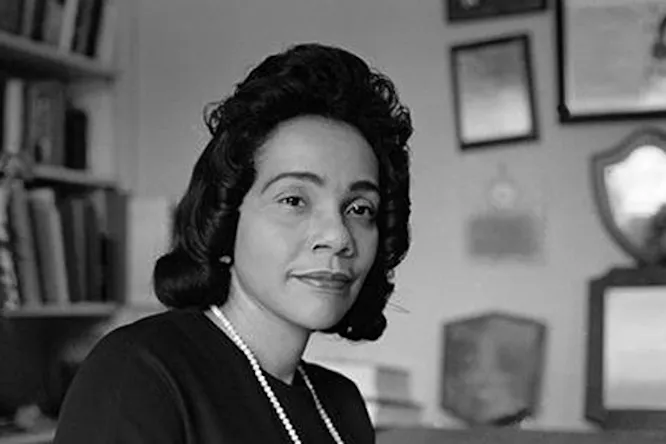 Photo: Coretta Mae Simmons, via offloadmedia.feverup.com
She never ran a race in her life. But she spent forty years making sure other people could.
The College at the End of the Road
In the late 1930s, Coretta Simmons began working as a seamstress for a small Black college in middle Tennessee. The school ran on a shoestring and a prayer, the way most Black educational institutions in the Jim Crow South were forced to operate. Athletic programs existed, but budgets for equipment and uniforms were essentially nonexistent. What the school had was a track coach with ambitions that far exceeded the resources available to him — and a seamstress who could look at a bolt of fabric and see a finished garment that nobody else could yet imagine.
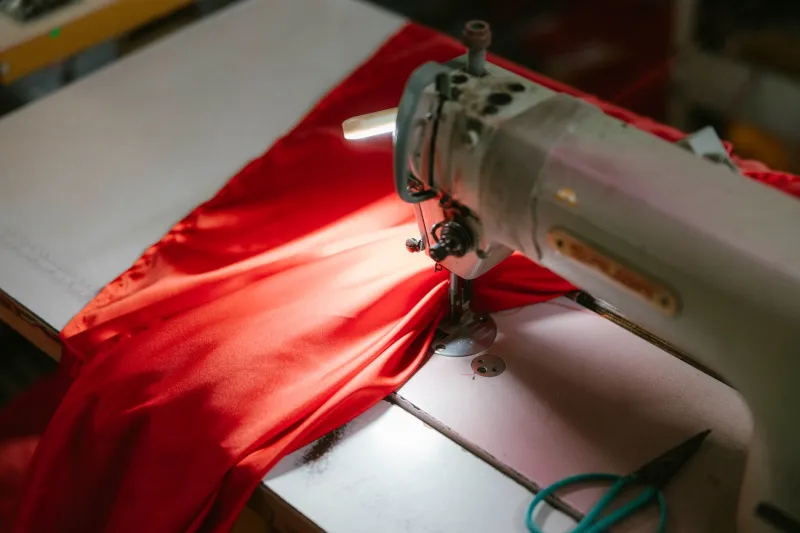
The partnership that developed between Coretta and the college's athletic program was never formalized in any contract or job description. She was paid for her sewing work, which covered alterations, repairs, and the occasional new piece. What she gave beyond that — the hours spent studying how uniforms moved on bodies in motion, the adjustments she made without being asked, the refusal to send anything out the door that wasn't exactly right — that was given freely, out of a pride that had nothing to do with recognition and everything to do with craft.
"She would make you try it on and run down the hallway," recalled one family member during an interview. "She'd watch how it moved. Then she'd take it back and do something to it. You might not even see what she changed, but you'd feel it."
Invisible Precision
What Coretta was doing, without any formal training in sports science or biomechanics, was applied physics. She was observing how fabric behaved under athletic stress and correcting for inefficiencies by instinct and accumulated observation. The athletes who wore her uniforms in competition often described feeling unusually comfortable, unusually unencumbered — like the clothes had been forgotten, which is exactly what you want when you're trying to run faster than any human being has run before.
Through the 1940s and into the 1950s, the college's track program began producing athletes who competed at national and eventually international levels. Several went on to compete in the Olympic trials. A handful made Olympic teams. Some broke records that stood for years.
None of the official accounts of those achievements mentioned the seamstress who spent her evenings adjusting inseams under a forty-watt bulb.
This was not unusual. It was, in fact, entirely typical of how history recorded — or failed to record — the contributions of Black women whose labor made remarkable things possible. The athletes were celebrated, rightly. The coaches were profiled in newspapers. The administrators received honorary degrees. The woman who made sure everything fit and moved correctly remained precisely as invisible as the social architecture of mid-century America intended her to be.
What the Fabric Remembers
Coretta Simmons retired from her work sometime in the late 1970s, her eyesight beginning to fail after decades of close work in inadequate light. By then, she had outfitted multiple generations of athletes — some of whom she had watched grow from nervous freshmen into national competitors. She kept no scrapbook, claimed no credit, and reportedly deflected every attempt to make a fuss over her contribution with a practicality that her family describes as simply being who she was.
"She'd say, 'I made the clothes. They did the running,'" according to one of her grandchildren. "Like those were two completely separate things."
But they weren't separate. They never were.
The records broken by athletes in her uniforms are documented in official books. The medals won are on display in family homes and school trophy cases. The times, the distances, the dates — all preserved with the careful attention that athletic achievement receives. What's missing from every single one of those records is the name of the woman whose precision was woven into the fabric of those performances as literally as thread.
A Larger Reckoning
Coretta Simmons's story is not unique in its invisibility. American sports history is full of similar absences — the groundskeepers who maintained the fields, the cooks who fed the training camps, the equipment managers who kept everything functional, the seamstresses and tailors who made sure elite athletes could move freely enough to be elite.
What makes Coretta's story worth telling now is precisely what made it easy to overlook then: she was a Black woman in the Jim Crow South doing skilled technical work that directly contributed to athletic achievement, operating in a system that was structurally designed to ensure her name never appeared anywhere near the achievements she helped enable.
The athletes she dressed remember her. Their children remember her. The family members who watched her work by lamplight and run teenagers down hallways to check how fabric moved — they remember her.
History, as it is formally recorded, does not.
The Thread That Runs Through Everything
There is a version of American sports mythology that is clean and simple: the athlete, the coach, the competition, the result. Hero rises, hero wins, hero is remembered.
The messier, truer version includes everyone else — the people whose names we don't know, whose contributions we can only now begin to reconstruct, whose excellence was absorbed into the achievements of others without credit or acknowledgment.
Coretta Mae Simmons spent forty years making sure that when athletes stepped to the line, the one thing they didn't have to think about was what they were wearing. That is a form of greatness. It just happens to be the kind that history has always found easiest to ignore.
She stitched the numbers onto the uniforms. Other people wore the glory. And somewhere in that gap between the labor and the recognition is a question that every one of us who loves sports history should be sitting with:
How many legends were built on the silent excellence of people history chose not to remember?
The answer, almost certainly, is more than we'll ever fully know.