Mop, Bucket, Breakthrough: The Midnight Custodian Who Changed How Athletes Heal
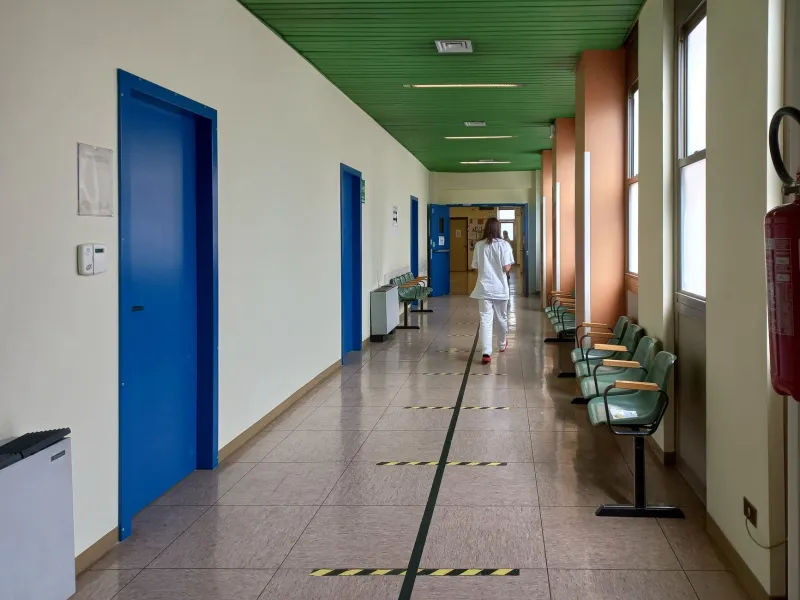
The Quietest Hours Teach the Loudest Lessons
Most people who revolutionize a field spend years in lecture halls, accumulating credentials and building networks. Ernie Galloway spent his formative years in a different kind of hall — the long, fluorescent-lit corridors of St. Augustine Regional Medical Center in rural Tennessee, pushing a mop cart past sleeping patients at two in the morning.
Galloway was hired as a hospital custodian in 1971, fresh out of a stint at a textile mill that closed without warning. He needed work. The night shift paid a little more and suited a man who'd always found the quiet hours easier to think in. What nobody anticipated — least of all Galloway himself — was that those quiet hours would turn him into one of the most unlikely contributors to modern sports rehabilitation.
He wasn't a doctor. He wasn't a trainer. He hadn't played organized sports beyond a season of high school baseball in the mid-1960s. But he was present, night after night, in the rooms where injured athletes came to recover. And Ernie Galloway paid attention.
Watching What Others Walked Past
St. Augustine Regional wasn't a major metropolitan hospital, but it sat close enough to a state university athletic program that it regularly received student athletes recovering from surgeries — torn ACLs, rotator cuff repairs, stress fractures. The orthopedic ward was Galloway's regular route.
In those years, standard rehabilitation philosophy leaned heavily on rest. The dominant thinking held that damaged tissue needed extended immobilization to heal properly. Athletes were kept still. Movement was rationed carefully, sometimes withheld for weeks after procedures.
Galloway noticed something that conflicted with that assumption.
He began observing that athletes who found ways to move — even small, informal movements, the kind nobody officially prescribed — seemed to progress differently than those who stayed flat. He watched a football lineman who couldn't sleep spend his midnight hours doing gentle leg circles that no physical therapist had ordered. He watched a swimmer work her fingers against her sheets in rhythmic patterns while the ward was dark. These weren't formal exercises. They were fidgets. Habits. The restless improvisations of competitive people who couldn't tolerate stillness.
Galloway started writing things down.
The Notebook Nobody Asked For
He bought a composition notebook from a drugstore and began keeping informal logs. Not medical charts — he was careful about that, knowing the boundaries of his role — but personal observations. Dates, patient descriptions (never names), the kinds of movements he witnessed, and rough timelines of when patients seemed to turn corners in their recovery.
Over five years, he filled four notebooks. Over twenty years, he filled thirty-one.
His supervisors knew he was meticulous about his work. They didn't know about the notebooks. His wife knew he spent time writing at the kitchen table after his shifts ended. She assumed it was a hobby. In a way, it was.
What Galloway was building, without formal training or institutional support, was a longitudinal observational record of informal movement during recovery — exactly the kind of data that sports medicine researchers would spend decades trying to collect through controlled studies.
The Connection That Changed Everything
The notebooks might have stayed in a shoebox forever if not for a physical therapist named Dr. Carolyn Marsh, who joined the hospital staff in 1989 and had the unusual habit of arriving early and staying late. She and Galloway crossed paths during shift overlaps, and over several months developed the kind of easy rapport that sometimes forms between people who share odd hours.
When Galloway finally showed her the notebooks, Marsh went quiet for a long time.
What she was reading wasn't polished data. It wasn't statistically rigorous. But it was consistent, detailed, and it tracked a pattern she'd been sensing in her own clinical work — that early, gentle, patient-initiated movement seemed to correlate with faster functional recovery, and that the psychological dimension of letting athletes feel some agency over their own healing mattered enormously.
Marsh spent the next three years working with Galloway to formalize his observations into a research framework. She brought in a colleague from Vanderbilt. They published a paper in 1993 that drew heavily on Galloway's documented observations as a foundation for a larger argument about passive versus active recovery protocols.
The paper didn't make Galloway famous. Academic papers rarely make anyone famous. But it circulated in sports medicine circles, and the ideas in it — particularly around athlete-initiated micro-movement and psychological ownership of the recovery process — began showing up in the training room conversations of NFL and NBA teams within a decade.
What the Establishment Missed
There's a reason someone like Galloway could see what credentialed professionals sometimes couldn't. He wasn't invested in any particular theory. He had no academic reputation to protect, no methodology to defend. He just watched.
He also watched at hours when nobody else was watching. Daytime rounds in a hospital are performances, in a sense — patients behave differently when doctors and therapists are present. The midnight hours Galloway worked were when patients dropped their compliance and just existed. What he observed was behavior unfiltered by the awareness of being observed.
That's a methodological advantage that no formal study could easily replicate.
Dr. Marsh, in interviews years later, was direct about it. "Ernie saw things we weren't positioned to see," she said. "Not because we weren't smart enough. Because we weren't there."
Rising From the Night Shift
Galloway retired from St. Augustine Regional in 2004 after thirty-three years. He received a small plaque at a staff luncheon. The hospital newsletter ran a short paragraph about his service.
By then, principles traceable in part to his observations had influenced rehabilitation approaches used by teams in three major professional leagues. Sports physical therapists were publishing work on active recovery protocols and athlete psychological engagement that echoed arguments first sketched in a composition notebook bought at a Tennessee drugstore.
Galloway never attended a conference. Never held a title. Never pushed for recognition, though Marsh made sure his name appeared in the acknowledgments of every paper she published on the subject.
He spent his retirement gardening and, reportedly, filling a few more notebooks — this time about plants.
The lesson his story carries isn't complicated. Expertise doesn't always wear a white coat. Sometimes it wears a gray uniform and works when the building is asleep. The question isn't where you're standing. It's whether you're paying attention.