The Woman Who Ran the Plays Before Anyone Ran the Plays: How a Switchboard Operator's Genius Quietly Rewired Pro Football
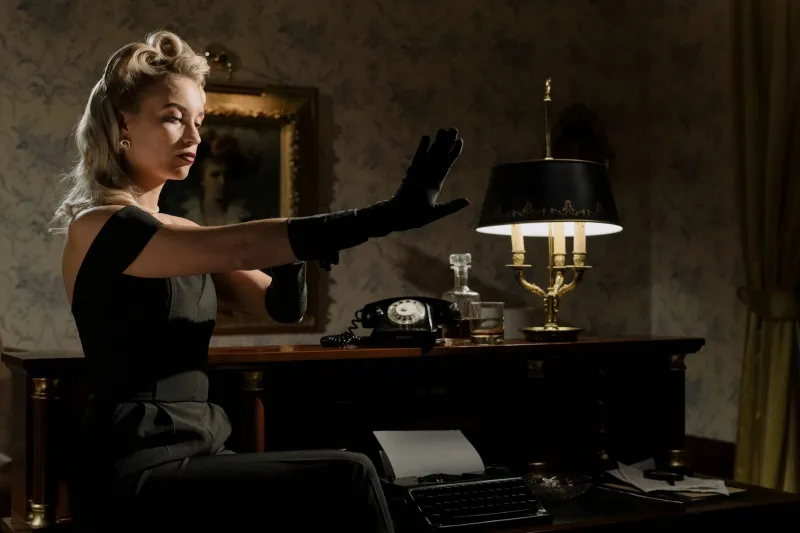
In the winter of 1951, a woman named Dorothy Fulbright was doing something most people couldn't do at speed: she was holding the entire world together with her hands.
Not literally, of course. But if you watched her work the switchboard at the Akron, Ohio, regional telephone exchange — the way her fingers moved between jacks and cords with a kind of physical certainty, the way she tracked seven simultaneous calls while answering an eighth, the way she could route a connection, hold a transfer, and flag a priority line without ever losing the thread of any of them — you might have been forgiven for thinking she was performing some kind of magic.
The man who first noticed her wasn't a telephone company executive. He was a frustrated assistant coach for a mid-level professional football team, and he was there because his car had broken down two blocks away and he needed to make a call.
He stayed for forty-five minutes just watching her work.
A Different Kind of Playbook
To understand why Dorothy's skills were so startling in a football context, you need to understand what professional football looked like organizationally in the early 1950s. It was, by modern standards, a kind of organized chaos.
Teams were still small operations. Coaching staffs were thin. Communication between coaches during games was primitive at best — a lot of shouting, a lot of hand signals, a lot of hoping the guy on the other side of the field understood what you meant. Player development was informal. Scouting was done mostly by feel and personal connection. There was no real system for tracking who knew what, who needed what, or how information moved from the front office to the coaching staff to the players themselves.
What there was, instead, was a lot of dropped threads.
Dorothy Fulbright had spent a decade making sure threads didn't drop. At the Akron exchange, she managed what was essentially a live information network — dozens of incoming calls, dozens of outgoing transfers, priority lines for hospitals and emergency services, all of it running simultaneously through her hands and her mind. She had developed, out of necessity, a kind of systems thinking that was years ahead of what most organizations were doing.
She knew, instinctively, that information only works if it gets to the right person at the right time. She knew that a delay of ten seconds could change everything. She knew that the difference between a functioning system and a broken one was almost always human — a moment of inattention, a failure to anticipate, a missed connection.
When the assistant coach — a man named Harold Briggs, who worked for a team that has since folded and been largely forgotten — watched her for those forty-five minutes, he didn't see a switchboard operator. He saw someone who understood something his sport desperately needed.
The Unlikely Hire
Briggs brought Dorothy's name to his head coach, a stubborn and brilliant man who had spent two seasons watching his team underperform not because of talent but because of what he called "the fog of the game" — the way information got lost, decisions arrived too late, and players never quite knew what the coaching staff needed from them.
The coach, skeptical but desperate, agreed to meet Dorothy. She came to the team's offices in the spring of 1952, wearing her good coat, carrying a notepad she'd prepared with a simple diagram of how she managed call flow at the exchange.
The meeting lasted three hours. By the end of it, the coach had offered her a job that didn't officially exist.
She became, in effect, the team's first operations coordinator — though nobody called it that. Her title, when anyone bothered to give her one, was "administrative assistant." The pay reflected the title rather than the work.
What She Actually Did
What Dorothy built over the next four seasons was something the sport had never really had: a living information system designed around the reality of how football decisions actually got made.
She created what she called a "priority board" — a physical wall chart, updated daily, that tracked every player's status, every coach's current focus, every outstanding question that needed an answer before game day. She borrowed the logic directly from her switchboard work: you can't manage a network if you don't know what's active, what's pending, and what's been dropped.
She instituted a morning briefing — fifteen minutes, mandatory, every weekday — in which each coach reported his three most pressing needs for the week. Dorothy took notes, cross-referenced them, and identified conflicts and redundancies. If two coaches needed the same player for different purposes on the same afternoon, she flagged it before it became a problem. If a scouting report was sitting unread in someone's in-box, she made sure it got to the person who needed it.
She also redesigned how the team communicated with players. Before Dorothy, information trickled down from coaches to players through a long chain of informal conversations, some of which never happened. She created a simple written system — brief, clear, personalized to each player — that ensured everyone knew exactly what was expected of them each week.
The results were not dramatic in any single game. They were cumulative. The team, which had finished near the bottom of its division in 1951, climbed steadily over the following three years. Players stopped missing assignments. Coaches stopped repeating themselves. The fog, as the head coach called it, began to clear.
The Part That Gets Left Out
Here's where the story gets complicated, and where Dorothy's history diverges from the kind of story that usually gets told.
She never received public credit. When the team's improved organization was discussed — in the local press, in coaching circles — it was attributed to the head coach's leadership. Dorothy's role was internal, invisible, and easy to overlook, partly because she was a woman in a male-dominated environment and partly because the work she did was the kind of work that only becomes visible when it's absent.
She left after the 1955 season when the coach who'd hired her retired. The new staff brought in their own people, and Dorothy returned to telecommunications work. She died in 1987 in Akron, survived by two daughters.
But the systems she built didn't entirely disappear. Several coaches who worked with her during those years carried what they'd learned into other organizations. The practices she pioneered — the daily briefings, the priority tracking, the written communication protocols — showed up, in different forms, in teams across the league over the following decades.
The language changed. The credit went elsewhere. But the logic was hers.
What a Switchboard Actually Teaches You
There's a temptation to frame Dorothy's story as a simple injustice — a woman whose work was stolen by men who should have known better. That's part of it. But the more interesting part is the thing that brought her to that room in the first place.
A switchboard operator in 1951 was managing something that looked, from the outside, like a purely mechanical job. In reality, it was a masterclass in systems thinking, human behavior, and real-time decision-making under pressure. Dorothy had been doing that work for a decade before anyone in football thought to ask what it might look like applied somewhere else.
The skills that built her career in telecommunications were the same skills that quietly transformed a football team. She just had to find someone willing to see past the job title to the mind behind it.
That's the thing about rising from anywhere. Sometimes the place you're rising from has already taught you everything you need. You just have to get into the room.